Skip to content

Roundup

The best combination sewing and embroidery machines

One machine, both jobs. The field runs from 16 to 170 square inches, only two of the seven publish an embroidery speed, and not one of them is a quilting machine.

By Scooter M., enthusiastPublished September 3, 2026How we pick

Heads up: the buy links on this page are affiliate links. If you buy through one we earn a commission at no extra cost to you. It does not change what we recommend or the order we rank things in - here is how we keep those separate.

The shortlist

Ranked, with the numbers

Ranked on published manufacturer specifications, normalized to the same units, with the arithmetic on what each step up actually buys. Tap any row for the full write-up, including who should skip it.

#MachineBest forScorePrice
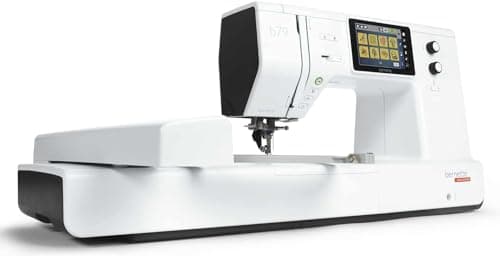
01A domestic sewing machine on a table - a stand-in for the bernette 79, not a photograph of this modelbernette 79Buyers who want the numbers published before they commitBest combo overall8.9Check price on Amazon
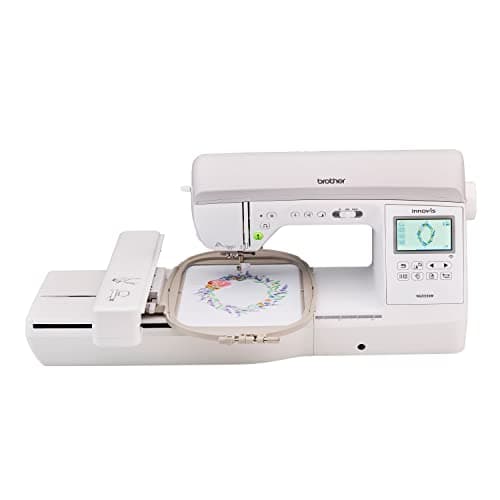
02A domestic sewing machine on a table - a stand-in for the Brother NQ3550W, not a photograph of this modelBrother NQ3550WOne machine that has to do both quilting and embroidery wellBest Brother combo8.8Check price on Amazon
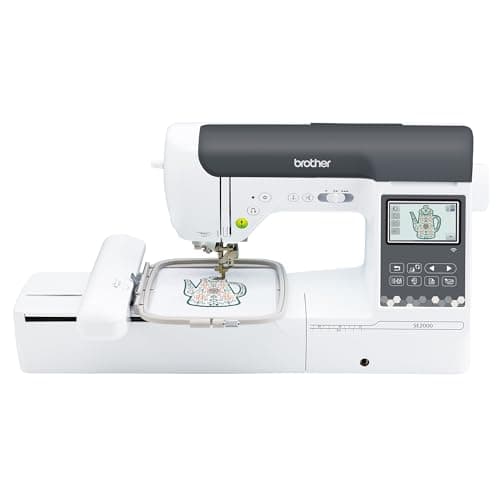
03A domestic sewing machine on a table - a stand-in for the Brother SE2000, not a photograph of this modelBrother SE2000The upgrade out of a 4 x 4 in combo machineBest 5 x 7 in combo8.6Check price on Amazon
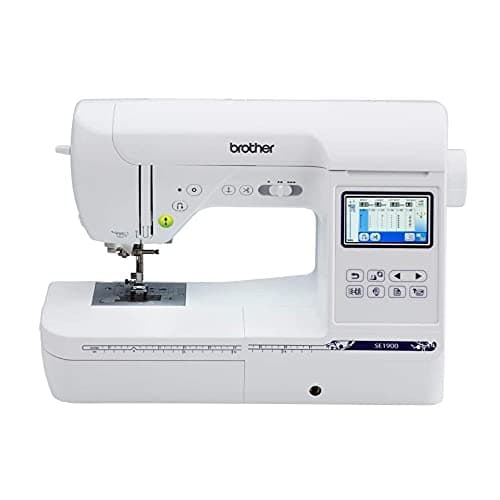
04A domestic sewing machine on a table - a stand-in for the Brother SE1900, not a photograph of this modelBrother SE1900Buyers who find it discounted well below the SE2000Best combo on discount7.6Check price on Amazon
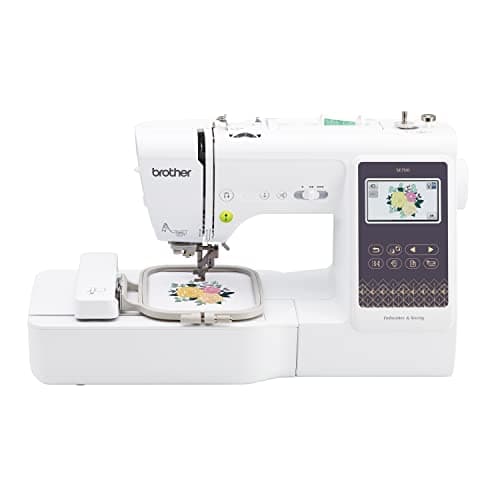
05A domestic sewing machine on a table - a stand-in for the Brother SE700, not a photograph of this modelBrother SE700A first embroidery machine you expect to replaceCheapest combo7.4Check price on Amazon

Scores are ours and editorial. They are never published as review or rating markup, because we have not tested these machines - here is what we did instead.

The short answer

The bernette 79. It has the largest field of any combination machine you can reasonably buy, and it is the only one whose maker publishes every number the decision turns on.

bernette publishes 260 x 160 mm (10.2 x 6.3 in) of embroidery area - 64.3 square inches - along with 9 in (230 mm) of space to the right of the needle, 850 spm embroidery, 1,000 spm sewing, 500 sewing stitches and 208 designs. Both unit systems, nothing inferred.

If you are already inside the Brother hoop and design ecosystem, the honest second answer is the NQ3550W at 6 x 10 in with 8.3 in of usable width. It is a slightly smaller field, published slightly less completely, attached to a much deeper US accessory range.

What a combination machine actually is

One head, one motor, one needle. An embroidery unit clips onto the side of the free arm and moves a hoop under a needle that stays where it is. Take the unit off and what is left is an ordinary domestic sewing machine with a full stitch library, a buttonhole and a zigzag.

That is worth being precise about, because two things follow from it. First, it is not two machines in one box - when it is set up for embroidery it is not available for sewing, and swapping back is a physical task rather than a menu option. Second, every machine on this page is single-needle, so a six-color design is five manual thread changes no matter which one you buy. Needles are a different category entirely, covered on the multi-needle page.

The alternative to a combination machine is not a better combination machine. It is two machines: a sewing machine you already own plus an embroidery-only machine, which buys you the same field for less money. That trade is the subject of the skip box further down.

The four things that decide which one you buy

Combination machines are sold on design libraries, screen sizes and app connectivity. Those are conveniences. Four published specifications decide what you can actually make, and they are the whole basis of the ranking above.

1. The maximum embroidery area, in square inches

This is a hardware limit set by how far the carriage travels. No accessory hoop lifts it, no firmware update changes it, and once you exceed it every design has to be split across two hoopings and re-aligned by eye. It is the single number most likely to make you replace the machine.

Field sizes get quoted as dimensions, which flattens the steps between tiers. Converted to area, the range on this page runs from 16 square inches to 170.

2. The space beside the needle - and how it is published

This is the sewing-side number: how much fabric fits between the needle and the machine body. It matters for anything bulky, and it is where the makers get slippery. Across seven machines it is published in three different shapes.

Brother gives a width-and-height pair for the SE600 (6.4 in wide x 4.1 in high), the SE700 (6.4 x 4.0 in) and the NQ3550W (8.3 x 4.1 in). It gives a single width for the SE2000 - 7.4 in from needle to arm, with no height at all. bernette gives a single width too, 9 in (230 mm). For the SE1900 and the Luminaire XP3, Brother publishes no work-area figure on the product page at all.

A width on its own is not comparable with a width-and-height pair, and the height is the dimension that runs out first on anything rolled. Anyone printing a tidy column of throat figures for all seven machines has filled in the gaps themselves.

3. Whether the maker publishes a speed

Maximum embroidery speed decides how long a 20,000-stitch design takes. Two of the seven machines here publish one. That is not a typo, and it is discussed in its own section below.

4. The sewing side you will actually use

Stitch counts run from 103 to 500 across this page and the difference matters far less than the number suggests. What you use is a straight stitch, a zigzag, a blind hem and a one-step buttonhole, and every machine here has all four. Treat stitch count as a tiebreaker, not a criterion - the field size is what you are buying.

Every combination machine here, on the published numbers

One row per machine, every figure read off the maker’s own product page and normalized into the same units. Areas are calculated from the published dimensions rather than quoted.

Combination sewing and embroidery machines compared on published specifications
MachineEmbroidery fieldAreaSpace beside the needleEmbroidery speedSewing stitches
Brother SE6004 x 4 in16.0 sq in6.4 x 4.1 inNot published103
Brother SE7004 x 4 in16.0 sq in6.4 x 4.0 inNot publishedOver 103
Brother SE19005 x 7 in35.0 sq inNot publishedNot published240
Brother SE20005 x 7 in35.0 sq in7.4 in wide, no height published650 spm241
Brother NQ3550W6 x 10 in60.0 sq in8.3 x 4.1 inNot published291
bernette 79260 x 160 mm (10.2 x 6.3 in)64.3 sq in9 in (230 mm), no height published850 spm500
Brother Luminaire XP310 5/8 x 16 in170.0 sq inNot publishedNot publishedNot published

Every source for that table is listed at the bottom of this page, one manufacturer link per machine.

What each step up actually buys

4 x 4 in to 5 x 7 in: 16 to 35 sq in, +119%.
5 x 7 in to 6 x 10 in: 35 to 60 sq in, +71%.
6 x 10 in to 260 x 160 mm: 60 to 64.3 sq in, +7%.
260 x 160 mm to 10 5/8 x 16 in: 64.3 to 170 sq in, +164%.

Two things fall out of that. The first upgrade is by far the biggest, so if your budget stretches to exactly one step, take it. And the gap between the NQ3550W and the bernette 79 is 7% - close enough that it should never be the reason you pick one over the other. Ecosystem and documentation decide that pair, not field.

The specification five of these seven do not publish

Maximum embroidery speed. Brother publishes 650 spm for the SE2000 and bernette publishes 850 spm for the 79. Those two are the entire list.

Brother lists no maximum embroidery speed for the SE600, SE700, SE1900, NQ3550W or the Luminaire XP3. It clearly holds the figures - it publishes 650 spm for the PE900 and 850 spm for the NQ1600E - it simply does not put them on these pages. So there is no honest way to rank five of the seven machines here on speed, and any page that gives you a number for them supplied it themselves.

Sewing speed is published even more thinly: 850 spm for the SE2000 and 1,000 spm for the bernette 79, and nothing we could read for the rest. We weight documentation in the ranking for exactly this reason, and the rubric is on the methodology page.

Why each machine placed where it did

1. bernette 79 - the largest field and the complete spec sheet

64.3 square inches of embroidery area, 9 in beside the needle, 500 sewing stitches, and both speed figures published in both unit systems. On the numbers it is the strongest combination machine here, and it is the only one where we did not have to write “not published” in a single cell we cared about.

The honest drawback: the United States accessory and design ecosystem is much smaller than Brother’s, and hoops do not transfer between brands. If you already own a drawer of Brother hoops, buying this machine means re-buying them, and that is a real cost rather than a rounding error. The full head to head is on the NQ3550W against the bernette 79.

2. Brother NQ3550W - the same class, inside the bigger ecosystem

6 x 10 in of field, 8.3 in of usable width - the widest of any Brother combination machine here - 291 stitches, 258 designs, a 3.67 in color touchscreen and wireless design transfer. For a buyer who already owns Brother hoops and buys Brother design files, this is the machine.

The honest drawback: 4.1 in of usable height, which is identical to the entry-level SE600. All the extra room is width. And Brother publishes no embroidery speed for it at all, which on a machine at this level is a strange omission.

3. Brother SE2000 - the upgrade tier, fully documented

5 x 7 in of field, 241 stitches, a 3.7 in color touchscreen, wireless transfer, and both speed figures published. It also officially supports Brother’s 4 x 7 in magnetic hoop, which is the practical fix for hoop burn on anything textured - the magnetic hoop page covers what that changes.

The honest drawback: 35 square inches is 42% short of the 6 x 10 in tier, and 650 spm embroidery is slow. If you already know you will want a 10 in long axis within a year, buying here means buying twice.

4. Brother SE1900 - the same field for less, with two blanks

The SE2000’s predecessor. Same 5 x 7 in field, 240 stitches, 138 designs. When it is discounted well below the SE2000 it is the best value on this page, because the thing you are buying - the field - is identical.

The honest drawback: no wireless transfer, so designs arrive by USB stick, and a 3 x 1.6 in screen against the SE2000’s 3.7 in color touchscreen. Brother also publishes neither a speed nor a work area for it, so two of the numbers we rank on are simply missing. Inside about 15% of the SE2000’s price, buy the SE2000.

5. Brother SE700 - the cheapest honest way in

4 x 4 in, 135 designs, over 103 stitches, a touchscreen, and a 6.4 in work area that matches machines costing far more. It monograms, it does a left-chest logo, it does a pocket motif, and it does those things properly.

The honest drawback: 16 square inches is a hardware ceiling and it is the one people hit fastest. If you keep embroidering, you will replace this machine, and buying the 5 x 7 in tier once is cheaper than buying both. Brother publishes no speed figure for it either.

The two that are on the table but not on the list

The Brother SE600 is the SE700 with 55 fewer built-in designs and a tenth of an inch more published work-area height. If it is materially cheaper on the day you look, buy it instead of the SE700 and lose nothing you can stitch - the two are covered side by side on the SE600 against the SE700.

The Brother Luminaire XP3 has the largest single-needle field Brother publishes, 10 5/8 x 16 in, and it is a genuine flagship. It is not a pick here because it is priced in a different category and because Brother publishes neither a speed nor a work area for it on the product page - at that money, three blank cells is not a specification sheet we can rank on.

Can a combination machine quilt?

This is the most common question behind the search, and the honest answer is: it can piece, it can quilt a throw, and it is not a quilting machine.

The number that decides it is the height of the opening, because a rolled queen quilt is a cylinder and height is what it runs out of. The best combination machine here publishes 8.3 x 4.1 in of usable space - 34 square inches. A straight-stitch quilting machine such as the Juki TL-2010Q publishes 8.5 x 6.0 in, which is 51: 50% more opening and 46% more of the dimension that binds.

So a combination machine is the right buy if quilting is occasional or throw-sized and embroidery is the reason you are shopping. If you quilt to queen size regularly, the combination machine is not the constraint you should be spending money on. The full trade is worked through on combination machine against dedicated quilting machine, and every opening on the site is normalized in the throat space chart.

Skip this

Skip the whole category if you already own a sewing machine you like

A combination machine makes you pay for a sewing head. If yours is fine, that money buys field instead: the Brother PE800 gives you 5 x 7 in with no sewing side, and the NQ1600E gives you the same 6 x 10 in field as the NQ3550W at a published 850 spm - a speed the NQ3550W does not publish at all.

You also get the thing no combination machine can do: your sewing machine stays threaded and set up for sewing while a design runs on the other one. If you piece and embroider in the same session, that is worth more than a stitch library. The three machine types sets out which question each one answers.

Choosing in five minutes

Measure your largest design first. Not the largest you can imagine - the largest you have actually stitched in the past year, and the largest you turned down. If both fit inside 5 x 7 in, the 6 x 10 in tier is headroom you will pay for and not use.

Then decide whether you are locked into a brand. If you own Brother hoops, the NQ3550W keeps them. If you own nothing, the bernette 79 is the better machine on the numbers and the switching cost is zero.

Then check the design against the field, not the hoop. Those are different measurements and the difference costs money - the cross-brand hoop size chart lists every machine on this site by its published maximum field in inches and millimeters.
The write-ups

Every pick, in full

01 / Best combo overall

A domestic sewing machine on a table - a stand-in for the bernette 79, not a photograph of this model

bernette

8.9 / 10

Premium combo tier

bernette 79

The most completely documented combo machine in this comparison. bernette publishes the embroidery field in both unit systems, the space to the right of the needle in both, and both speed figures, which is more than Brother does for any machine in its own range.

Check price on Amazon

#ad We hold no verified live price for this machine, so we show none. How this site is funded.

Published specifications for the bernette 79, with the source of each
SpecificationPublished valueWhere it is published
Maximum embroidery area260 mm x 160 mm (10.2 in x 6.3 in)Published as "260x160mm (10.2"x6.3")"bernette 79 product page
Space to the right of the needle9 in (230 mm)Published as "9"" / 230 mmbernette 79 product page
Maximum embroidery speed850 stitches per minutebernette 79 product page
Maximum sewing speed1,000 stitches per minutebernette 79 product page
Sewing stitches500bernette 79 product page
Embroidery designs208bernette 79 product page

What it does well

  • 64.3 sq in of design area, the largest single-needle field here short of the flagships
  • 9 in to the right of the needle, wider than any Brother combo machine
  • 850 spm embroidery beats every Brother combo machine that publishes a figure
  • Every number we wanted is published, in both unit systems

What it does not

  • Smaller accessory and design ecosystem than Brother in the United States
  • Hoops do not carry over from a Brother machine

Skip this one if

You are already inside the Brother design and hoop ecosystem and own hoops. Switching brands means re-buying them.

How it scores, by criterion

Room to work9.5
What it upgrades from9.0
Value for the tier8.0
Headroom before the next upgrade8.5
Spec transparency10.0

02 / Best Brother combo

A domestic sewing machine on a table - a stand-in for the Brother NQ3550W, not a photograph of this model

Brother

8.8 / 10

Premium combo tier

Brother NQ3550W

The largest embroidery field on a machine that still sews: 6 x 10 in, with 8.3 in of usable width beside the needle. This is the point at which one machine genuinely covers both jobs.

Check price on Amazon

#ad We hold no verified live price for this machine, so we show none. How this site is funded.

Published specifications for the Brother NQ3550W, with the source of each
SpecificationPublished valueWhere it is published
Maximum embroidery area6 in x 10 inPublished as "6" x 10"" embroidery hoop capacityBrother NQ3550W product page
Work area (needle to arm)8.3 in wide x 4.1 in highPublished as "8.3" x 4.1" of usable space"Brother NQ3550W product page
Built-in embroidery designs258Brother NQ3550W product page
Built-in sewing stitches291Brother NQ3550W product page
Display3.67 in color LCD touchscreenBrother NQ3550W product page
Maximum embroidery speedBrother does not publish a figure for this modelBrother NQ3550W product page

The arithmetic

6 x 10 in is 60 sq in. 5 x 7 in is 35. That is 71% more design area for one step up.

60 / 35 = 1.71. The jump matters most for anything with a long axis - a name across a back, a border on a towel, a quilt label - because a 10 in dimension removes the split that a 7 in field forces.

What it does well

  • 60 sq in of design area, 71% more than a 5 x 7 in machine
  • 8.3 in of usable width is the widest of any combo machine here
  • Wireless design transfer

What it does not

  • 4.1 in of usable height is unchanged from an entry machine, and width is not the only dimension a quilt needs
  • No published embroidery speed

Skip this one if

You embroider for money. At this price the four-needle machines start, and a four-needle machine changes colors without you.

How it scores, by criterion

Room to work9.0
What it upgrades from9.0
Value for the tier8.0
Headroom before the next upgrade8.5
Spec transparency8.0

03 / Best 5 x 7 in combo

A domestic sewing machine on a table - a stand-in for the Brother SE2000, not a photograph of this model

Brother

8.6 / 10

Upper combo tier

Brother SE2000

The combo machine to buy if you are upgrading rather than starting: 5 x 7 in of field, 241 sewing stitches, a 3.7 in color screen, wireless design transfer, and published speed figures, which most of Brother's range does not have.

Check price on Amazon

#ad We hold no verified live price for this machine, so we show none. How this site is funded.

Published specifications for the Brother SE2000, with the source of each
SpecificationPublished valueWhere it is published
Maximum embroidery area5 in x 7 inPublished as "5" x 7""Brother SE2000 product page
Needle to arm7.4 inPublished as "7.4" from needle to arm"Brother SE2000 product page
Maximum embroidery speed650 stitches per minuteBrother SE2000 product page
Maximum sewing speed850 stitches per minuteBrother SE2000 product page
Built-in embroidery designs193Brother SE2000 product page
Built-in sewing stitches241Brother SE2000 product page
Magnetic hoop supportTakes the Brother 4 in x 7 in magnetic hoopBrother SE2000 product page
Display3.7 in color LCD touchscreenBrother SE2000 product page

The arithmetic

5 x 7 in is 35 sq in of design area. 4 x 4 in is 16. The upgrade more than doubles what you can stitch in one hooping.

35 / 16 = 2.19. Everything that previously needed splitting across two hoopings - a full back design, a large name drop, most jacket work - becomes a single hooping. The time saved is not the stitching. It is the re-hooping and the alignment.

What it does well

  • 119% more design area than any 4 x 4 in machine
  • Brother publishes both speed figures, which the SE600 and SE700 pages do not
  • Wireless design transfer removes the USB stick from the workflow
  • Officially supports the 4 x 7 in magnetic hoop, which is the real fix for hoop burn

What it does not

  • 650 spm embroidery is slow next to a multi-needle machine's 1,000
  • 7.4 in needle-to-arm is a domestic figure; it does not make this a quilting machine

Skip this one if

You are going to want 6 x 10 in within a year. Buy the field you will need, not the field you need today.

How it scores, by criterion

Room to work7.5
What it upgrades from9.5
Value for the tier8.5
Headroom before the next upgrade7.0
Spec transparency9.5

04 / Best combo on discount

A domestic sewing machine on a table - a stand-in for the Brother SE1900, not a photograph of this model

Brother

7.6 / 10

Upper combo tier

Brother SE1900

The SE2000's predecessor: same 5 x 7 in field, 240 sewing stitches, a smaller screen and no wireless. Worth buying on price alone, and Brother publishes neither a speed figure nor a work area for it.

Check price on Amazon

#ad We hold no verified live price for this machine, so we show none. How this site is funded.

Published specifications for the Brother SE1900, with the source of each
SpecificationPublished valueWhere it is published
Maximum embroidery area5 in x 7 inPublished as "5" x 7"" maximum embroidery areaBrother SE1900 product page
Built-in embroidery designs138Brother SE1900 product page
Built-in sewing stitches240Brother SE1900 product page
Display3 in x 1.6 inBrother SE1900 product page
Maximum embroidery speedBrother does not publish a figure for this modelBrother SE1900 product page
Work area (needle to arm)Brother does not publish a figure for this modelBrother SE1900 product page

What it does well

  • The same 5 x 7 in field as the SE2000 for less money
  • 240 built-in stitches is a complete domestic sewing set

What it does not

  • No wireless transfer
  • 3 x 1.6 in screen against the SE2000's 3.7 in color touchscreen
  • Two of the numbers that matter most are simply not published

Skip this one if

The SE2000 is within about 15% of the price. Wireless transfer and the larger screen are the difference between a pleasant workflow and a USB stick.

How it scores, by criterion

Room to work7.5
What it upgrades from8.5
Value for the tier8.0
Headroom before the next upgrade7.0
Spec transparency5.0

05 / Cheapest combo

A domestic sewing machine on a table - a stand-in for the Brother SE700, not a photograph of this model

Brother

7.4 / 10

Entry combo tier

Brother SE700

The cheapest honest way into machine embroidery, and the machine most people outgrow first. A 4 x 4 in hoop is 16 square inches of design area: it will monogram, it will do a left-chest logo, and it will not do the back of a jacket.

Check price on Amazon

#ad We hold no verified live price for this machine, so we show none. How this site is funded.

Published specifications for the Brother SE700, with the source of each
SpecificationPublished valueWhere it is published
Maximum embroidery area4 in x 4 inPublished as "4" x 4"" maximum embroidery areaBrother SE700 product page
Work area (needle to arm)6.4 in wide x 4.0 in highPublished as "6.4" x 4.0" work area"Brother SE700 product page
Built-in embroidery designs135Brother SE700 product page
Built-in sewing stitchesOver 103Brother SE700 product page
Display3.2 in x 1.8 in LCDBrother SE700 product page
Maximum embroidery speedBrother does not publish a figure for this modelBrother SE700 product page

The arithmetic

Moving from a 4 x 4 in hoop to a 5 x 7 in hoop is not 75% more room. It is 119% more.

4 x 4 = 16 sq in. 5 x 7 = 35 sq in. 35 / 16 = 2.19, so the 5 x 7 in field is 119% larger. That is the biggest proportional jump anywhere in the Brother range, and it is why the SE700 is the machine most first buyers replace.

What it does well

  • Sews and embroiders, so it can be the only machine on the table
  • Touchscreen design editing rather than a button-and-dial interface
  • The 6.4 in work area matches the SE600, so piecing is unaffected

What it does not

  • 4 x 4 in is a hardware ceiling, not a hoop you can buy past
  • Brother publishes no stitches-per-minute figure for it

Skip this one if

You already know you want designs bigger than a coaster. The 4 x 4 in ceiling is fixed in hardware and no accessory hoop lifts it.

How it scores, by criterion

Room to work4.5
What it upgrades from8.5
Value for the tier8.0
Headroom before the next upgrade4.0
Spec transparency7.0

How this was ranked

Machines we claim to have tested: none. Everyone in this category says they tested twenty. We have not tested any, and we say so. What we did instead: built the candidate set from what Amazon actually stocks, read the published specification off each manufacturer’s own page, normalized every measurement into the same units and the same order, did the arithmetic on what each step up buys, and left every figure the maker does not publish visibly blank rather than filling it in. Every number on this page links to where it was published, so you can check the work in about five minutes.

Sponsored placements
0
Free machines accepted
0
Specs linked to a maker page
All

The full method, including what we refuse to claim

Questions people actually ask

Frequently asked

What is the best combination sewing and embroidery machine?

On published specifications, the bernette 79: 260 x 160 mm (10.2 x 6.3 in) of embroidery area, 9 in beside the needle, 500 sewing stitches, and both speed figures published where most makers publish none. The Brother NQ3550W is the better buy if you already own Brother hoops, at 6 x 10 in and 8.3 in of usable width.

Is a combination machine good for quilting and embroidery?

For embroidery, yes. For quilting, only up to a point. The best combination machine here publishes 8.3 x 4.1 in of usable space - 34 square inches - against 51 on a dedicated straight-stitch quilting machine. It will piece and it will quilt a throw. A rolled queen quilt runs out of height first.

Is it better to buy a combination machine or two separate machines?

Two machines, if you already own a sewing machine you like. An embroidery-only machine gives you the same field for less because there is no sewing head to build, and your sewing machine stays set up for sewing. One combination machine makes sense when it is going to be the only machine on the table.

How fast is a combination sewing and embroidery machine?

Where the figure is published: 650 stitches per minute embroidery on the Brother SE2000 and 850 on the bernette 79. Brother publishes no maximum embroidery speed for the SE600, SE700, SE1900, NQ3550W or the Luminaire XP3, so we leave those blank rather than estimating them.

What size embroidery field do I need on a combination machine?

5 x 7 in covers most home work - 35 square inches, which is 119% more than a 4 x 4 in machine. Step up to 6 x 10 in only if your designs need a long axis: a name across a back, a towel border, a sleeve run. That step is 71% more area and almost all of it is length.

Do combination machines use the same hoops as other brands?

No. Hoop mounts are brand-specific and do not transfer, so switching from Brother to bernette or the reverse means re-buying every hoop you own. It is one of the few genuine switching costs in this category and it is worth pricing before you decide.

Sources

Every specification on this page was read from one of these pages on 1 September 2026.

Read next