Head to head
Combination machine vs dedicated quilting machine
One machine that does both, or two that each do one thing properly. The gap is 50% more throat opening and 76% more speed, and that is the whole argument.
Heads up: the buy links on this page are affiliate links. If you buy through one we earn a commission at no extra cost to you. It does not change what we recommend or the order we rank things in - here is how we keep those separate.
The short answer
Two machines, if you seriously do both. One, if quilting is occasional.
Brother’s NQ3550W is the best combination machine on this site: 6 x 10 in of embroidery field, 291 stitches, and 8.3 x 4.1 in of usable space - 34 square inches of throat opening.
The Juki TL-2010Q publishes 8.5 x 6 in - 51 square inches, 50% more - at 1,500 stitches per minute, and cannot embroider at all.
The gap, in published numbers
| Brother NQ3550W (combination) | Juki TL-2010Q (quilting) | |
|---|---|---|
| Throat opening | 8.3 x 4.1 in = 34.0 sq in | 8.5 x 6.0 in = 51.0 sq in |
| Throat height | 4.1 in | 6.0 in |
| Maximum sewing speed | Not published by Brother | 1,500 spm |
| Embroidery field | 6 x 10 in (60 sq in) | None - it does not embroider |
| Sewing stitches | 291 | 1 (straight only) |
| Buttonhole | Yes | No |
50% more opening, and 46% more of the dimension that binds
Opening: 51.0 against 34.0 sq in = 50% more.
Height, which is what a rolled quilt runs out of first: 6.0 against 4.1 in = 46% more.
In practice that is the difference between a queen quilt being work and a queen quilt being a fight. Around 4 inches of height is comfortable to a throw; around 6 makes a queen workable.
What the combination machine gives you back
One footprint, one purchase, and a genuinely good 6 x 10 in embroidery field - 60 square inches, which is more than most dedicated embroidery machines at this level.
It also has 291 sewing stitches, a buttonhole and a zigzag, none of which a straight-stitch quilting machine has. If you make garments as well, the combination machine is doing three jobs and the specialist is doing one.
The three-way split that most people actually want
If you seriously quilt and seriously embroider, the honest configuration is two machines, and it is often cheaper than one high-end combination machine:
- A straight-stitch quilting machine - the Juki TL-2010Q at 51 square inches and 1,500 spm.
- An embroidery-only machine - the Brother PE800 at 5 x 7 in, or the NQ1600E at 6 x 10 in.
Each machine stays set up for its job. Nothing gets reconfigured. The embroidery machine runs a design while you piece on the other one, which a single combination machine physically cannot do.
Who should buy which
Buy one combination machine if you have room for one machine, if quilting is occasional or throw-sized, or if you also make garments and want the stitch library. Which one is a separate question, and the combination machines are ranked against each other here.
Buy two dedicated machines if you quilt to queen size regularly, if you embroider often enough that reconfiguring annoys you, or if you want both jobs done by a machine built for it.
Skip this
Do not buy a combination machine expecting it to quilt like a quilting machine
The published numbers are unambiguous: 34 square inches of opening against 51, and no published sewing speed against 1,500 stitches per minute.
The NQ3550W is a very good machine that embroiders exceptionally well for its class. It is not a quilting machine with an embroidery unit, and the specification sheet says so.
The picks
The dedicated pair, and the combination machine
A quilting specialist plus an embroidery-only machine covers both jobs better than one combination machine, if you have room for two.
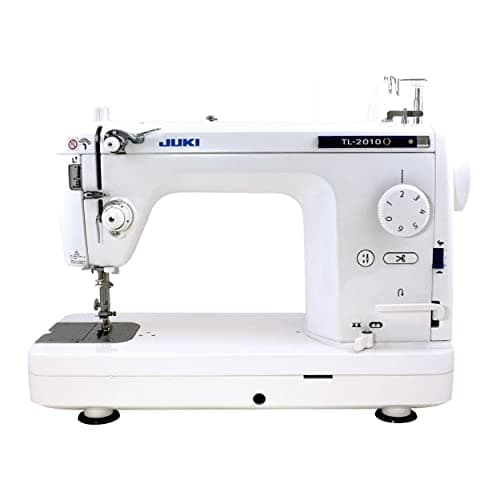
Juki
Juki TL-2010Q
Semi-professional straight-stitch tier
8.5 in wide by 6 in high of arm space, straight stitch only, at 1,500 stitches per minute. Six inches of usable height is the number to notice: it is the most vertical room of any domestic machine in this comparison, and height is what a rolled quilt actually consumes.
Skip it if: You need decorative stitches or a buttonhole. This machine does one stitch, in one direction, extremely well, and nothing else at all.
#ad Price as of October 18, 2026, from Amazon. Prices change. How this site is funded.
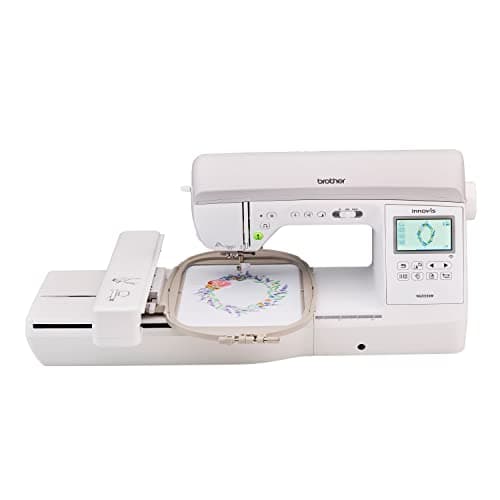
Brother
Brother NQ3550W
Premium combo tier
The largest embroidery field on a machine that still sews: 6 x 10 in, with 8.3 in of usable width beside the needle. This is the point at which one machine genuinely covers both jobs.
Skip it if: You embroider for money. At this price the four-needle machines start, and a four-needle machine changes colors without you.
#ad Price as of October 18, 2026, from Amazon. Prices change. How this site is funded.
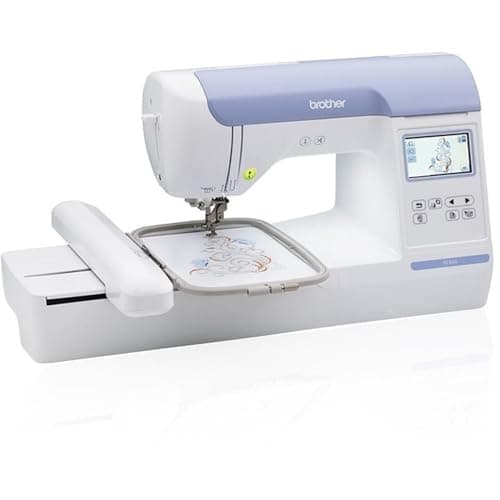
Brother
Brother PE800
Mid embroidery-only tier
5 x 7 in of field with no sewing head to pay for. If you already own a sewing machine you like, this is the cheapest route to a 5 x 7 in hoop.
Skip it if: This would be your only machine. It does not sew: no straight stitch, no seam, no hem.
#ad Price as of October 18, 2026, from Amazon. Prices change. How this site is funded.
How this was ranked
Machines we claim to have tested: none. Everyone in this category says they tested twenty. We have not tested any, and we say so. What we did instead: built the candidate set from what Amazon actually stocks, read the published specification off each manufacturer’s own page, normalized every measurement into the same units and the same order, did the arithmetic on what each step up buys, and left every figure the maker does not publish visibly blank rather than filling it in. Every number on this page links to where it was published, so you can check the work in about five minutes.
- Sponsored placements
- 0
- Free machines accepted
- 0
- Specs linked to a maker page
- All
Questions people actually ask
Frequently asked
Can one machine do both quilting and embroidery well?
It can do both. Well is a stretch on the quilting side: the best combination machine here publishes 34 square inches of throat opening against 51 on a straight-stitch quilting machine, and no maximum sewing speed against 1,500 spm.
Is it cheaper to buy one combination machine or two dedicated ones?
Often two dedicated machines cost less than one high-end combination machine, and each stays set up for its job. It is a space question more than a money question.
How much throat space does a combination machine have?
The Brother NQ3550W, the largest here, publishes 8.3 x 4.1 in of usable space - 34 square inches. The Juki TL-2010Q publishes 8.5 x 6.0 in, which is 51.
Do I need a separate machine for embroidery?
Only if you do both regularly. If you already own a sewing machine you like, an embroidery-only machine such as the Brother PE800 gives you a 5 x 7 in field without paying for a second sewing head.
What can a combination machine do that a quilting machine cannot?
Embroider, obviously - the NQ3550W publishes a 6 x 10 in field. Also zigzag, buttonholes and 291 built-in stitches. A straight-stitch quilting machine does one stitch and nothing else at all.
Sources
Every specification on this page was read from one of these pages on 1 September 2026.
Read next
- Brother NQ3550W review
- The best combination sewing and embroidery machines
- The types of embroidery machines, and which one you need
- The best quilting machines, ranked on the opening rather than the headline
- The sewing machine throat space chart
- Embroidery machine vs sewing machine
- The embroidery machine hoop size chart
- Quilting machine vs sewing machine