
Reference table
The sewing machine throat space chart
Every machine on this site normalized to width by height in inches, with the maker's original wording and a source link per row.
Throat Space
Harp space and throat space are the same thing. Manufacturers publish it three different ways, sometimes two different ways in the same catalog. This is the one table that fixes that.
2different orders Brother uses to publish the same measurement
The premise
This is the cluster the site is named for, and it exists because of one specific failure in how this category publishes information.
Throat space is the opening between the needle and the body of the machine: the tunnel a rolled quilt has to pass through. Harp space is the same measurement under a different name. Some manufacturers publish only the width. Some publish width and height. Some publish height first and width second, on a different page of the same website.
The result is that a quilter comparing two machines is frequently comparing two different measurements. Everything in this section exists to fix that for one specific purchase decision.
If you buy one thing
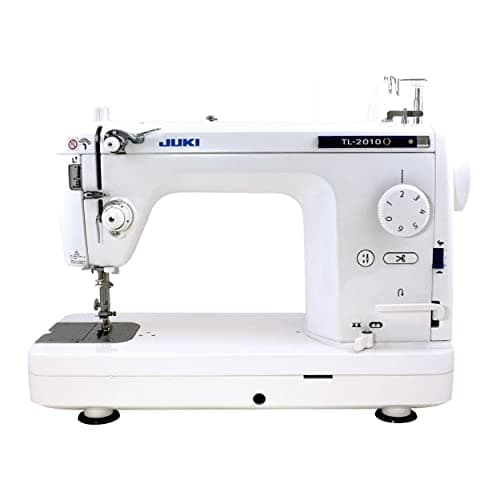
Juki · Semi-professional straight-stitch tier
The largest throat opening of any domestic machine we could find a published width-and-height pair for: 215 x 150 mm, which Juki labels explicitly so there is no ambiguity about which figure is which.
Skip it if: You need decorative stitches or a buttonhole. This machine does one stitch, in one direction, extremely well, and nothing else at all.
#ad Price as of October 18, 2026, from Amazon. Prices change. How this site is funded.
What decides it
Stand in front of a domestic sewing machine. The needle is on the left; the upright body of the machine is on the right. The gap between them - the horizontal distance from the needle to the machine body, and the vertical distance from the bed to the underside of the arm - is the throat.
“Harp space” is a term borrowed from the shape of the arm and means exactly the same thing. If a listing quotes one and a spec sheet quotes the other, they are describing the same tunnel.
These are not hypotheticals. Every example below is on a live manufacturer page:
Juki is the exception worth naming: it publishes “215(W) x 150(H)mm / 8.5″(W) x 6″(H)” - both units, both dimensions, both labeled. That is what the whole category should look like.
Because the two dimensions are not interchangeable and the smaller one is what binds. Take three machines that all get sold as roomy:
The order of the three by advertised width is the exact reverse of their order by actual opening. A quilter who bought on the 10-inch headline number bought the smallest throat of the three, and nothing on the page they read would have told them.
It depends on the finished quilt, because what has to fit through the throat is half the quilt rolled up. A lap quilt rolls to something a domestic machine will pass. A king does not, at any width you can buy without a frame. The banded working - throw, twin, queen, king, against throat opening - is on the how-much-do-you-need page, with the arithmetic shown so you can re-run it against your own quilt.
The chart is the reference: every machine on this site, normalized to width by height in inches, with the manufacturer page each figure came from and a note wherever the maker published it in a different order. The roundup turns that into a purchase. The harp versus throat page answers the terminology question in the first sentence, because that is all that question needs.
Look it up
Reference table
Every machine on this site normalized to width by height in inches, with the maker's original wording and a source link per row.
What to buy

Roundup
Five machines ranked on actual throat opening, with the arithmetic that puts the 10-inch machine last.
Juki TL-2010Q — our largest throat opening pick on that page
#ad Price as of October 18, 2026, from Amazon. Prices change. How this site is funded.
Work it out first

Guide
The banded answer by finished quilt size, with the arithmetic so you can re-run it against your own machine.

Guide
One measurement, two names, and the real ambiguity that hides behind the terminology question.

Guide
Where the domestic ceiling really sits, what actually reaches 12 inches, and the honest alternative if that is what you were shopping for.
Guide
The core arithmetic of this site: why opening area reverses the ranking you get from advertised throat width.
Guide
Where to put the tape, why your figure will differ from the published one, and how to compare the result against every machine on this site.
Guide
What a table changes, the published sizes from Juki and Brother, and the arithmetic showing it multiplies support while leaving the opening untouched.
The rest of the site
The upgrade decision is one question asked from five directions. These are the other four.