Head to head
Quilting machine vs sewing machine
The difference is not a feature list. It is one stitch instead of two hundred, half again the opening, and about twice the speed - and that trade decides which one you should own.
Heads up: the buy links on this page are affiliate links. If you buy through one we earn a commission at no extra cost to you. It does not change what we recommend or the order we rank things in - here is how we keep those separate.
The short answer
A domestic quilting machine is a sewing machine that does one stitch, very fast, through a bigger hole.
A straight-stitch quilting machine such as the Juki TL-2010Q publishes 1 built-in stitch, 1,500 stitches per minute and a 215 x 150 mm (8.5 x 6 in) opening. A general-purpose domestic machine such as the Brother NQ3550W publishes 291 stitches, no speed figure at all and a 8.3 x 4.1 in opening. That is the whole trade.
Buy a quilting machine if: you already own a sewing machine you like, and you want to quilt full-size quilts without fighting the opening.
Buy a sewing machine if: this will be your only machine. A straight-stitch machine will not sew a buttonhole, a zigzag or a stretch seam, and no setting unlocks them.
The question behind the question: can a quilting machine do your ordinary sewing? Mostly no - see below.
The words are not official, which is where the confusion starts
No standards body defines “quilting machine”. Manufacturers use it three different ways, and all three are on sale right now.
- A straight-stitch semi-professional machine. One stitch, an industrial-style hook, a large opening, 1,500 spm and up. The Juki TL series, the Brother PQ series, the Janome HD8. This is what this page means by quilting machine.
- A domestic machine marketed for quilting. A normal sewing machine with a wide table, some quilting feet and the word Quilting in the product title. Brother titles the CS7000X, CP100X, XR9550, HC1850 and XR3774 exactly this way.
- A longarm on a frame. A different category of object, covered in domestic vs longarm.
Only the first one is a genuinely different machine from a sewing machine. The second is a sewing machine with accessories, which is not a criticism - it is frequently the right purchase.
How we judged this
Four published figures, chosen because each one changes something a quilter does on a specific day:
- Stitch count - whether the machine can do your non-quilting sewing at all.
- Opening - width and height, because a rolled quilt is a cylinder and height is what it runs out of.
- Maximum speed - how long a quilt takes, and whether the machine is happy being run flat out for hours.
- What is in the carton - feet, tables, knee lifters, the things that cost money afterwards.
The two kinds, side by side
| Juki TL-2010Q (quilting machine) | Brother NQ3550W (sewing machine) | Brother CS7000X (sewing machine, quilting-marketed) | |
|---|---|---|---|
| Built-in stitches | 1 - straight stitch only | 291 | 70 |
| Buttonholes | None | Yes | 7 styles |
| Opening | 8.5 x 6.0 in (215 x 150 mm) | 8.3 x 4.1 in | Not published |
| Opening area | 51.0 sq in | 34.0 sq in | Not published |
| Maximum speed | 1,500 spm | Not published | 750 spm |
| Knee lifter | Yes, with a published 12 mm lift | - | Published as No |
| Extension table | 590 x 335 mm, published | - | Wide table: Yes, size not published |
| Walking foot in the carton | Even feed foot, named | - | Named |
| Free-motion foot | 1/4 in quilting foot, named | - | Published as included |
| Also embroiders | No | Yes, 6 x 10 in field | No |
| Weight | 11.5 kg (25.4 lb) | - | 10.5 lb |
The opening is the real difference, and it is not the number you are shown
The TL-2010Q is 8.5 in wide. The NQ3550W is 8.3 in wide. On width, they are the same machine. The difference is height: 6.0 in against 4.1 in.
Why 0.2 in of width is nothing and 1.9 in of height is everything
Half the quilt is rolled up and has to pass through the opening. A roll is round, so what stops it is the smaller of the two dimensions, and on a domestic machine the smaller one is always the height.
Juki TL-2010Q: 8.5 x 6.0 = 51.0 sq in of opening.
Brother NQ3550W: 8.3 x 4.1 = 34.0 sq in.
The quilting machine has 50% more opening from being 2% wider, because it is 46% taller. This is the single most useful thing on this page: when a listing quotes you one number for throat space, it is quoting the width, and the width is not the constraint.
The full set of openings, with both dimensions where the maker publishes them, is in the throat space chart, and width vs height covers why the industry quotes the flattering one.
Can a quilting machine do ordinary sewing?
This is the question people actually mean, so here is the direct answer: a straight-stitch quilting machine will sew any seam that is a straight line, beautifully, and nothing else at all.
Juki publishes one stitch for the TL-2010Q. Brother publishes one built-in stitch selection for the PQ1600S and zero buttonhole styles. These are not settings that are hidden in a menu - the machines have no zigzag mechanism. What that rules out:
- Buttonholes. Not possible. Zero styles on both machines.
- Finishing a raw edge. No zigzag and no overcast stitch. You need pinking shears, a serger or French seams.
- Knits and stretch fabric. A straight stitch in a stretch seam snaps when the seam stretches.
- Decorative stitching, stretch stitching, blind hems, lettering. None of it.
What it does extremely well is piecing - thousands of straight seams at a consistent quarter inch, at 1,500 stitches per minute, through an industrial-style hook that does not complain about being run all day. That is most of making a quilt.
Skip this
The trap: buying the straight-stitch machine as your only machine
It is a genuinely better machine than most domestics at the one thing it does, which makes it very easy to talk yourself into. Then the first time you need a buttonhole on a garment, or to zigzag the edge of a facing, the machine simply cannot.
The honest configuration is two machines: a general-purpose domestic for everything with a buttonhole in it, and a straight-stitch machine for piecing and quilting. That is also why these machines are priced where they are - they are second machines, and the makers know it.
What about speed - does 1,500 spm matter?
Less than the opening, more than you would guess. Juki publishes 1,500 spm for the TL-2010Q and Brother publishes 1,500 spm for the PQ1600S. Brother publishes 750 spm for the CS7000X and no figure at all for the NQ3550W.
Doubling the speed does not halve the time to quilt a quilt, because most of the time is spent repositioning, not stitching. Where it shows is long straight runs - stitching in the ditch down a queen quilt, or chain piecing two hundred units - and in the fact that a machine rated for 1,500 spm is built to be run near its limit without heating up.
The middle option nobody mentions
Brother sells five machines whose own titles read “Sewing and Quilting Machine” - the CS7000X, CP100X, XR9550, HC1850 and XR3774. They are sewing machines with a wide table and, on most of them, quilting feet in the carton.
They are the right answer for a large number of people: one machine, full stitch library, quilting accessories included, a fraction of the price. What they will not tell you is their opening - not one of the five publishes a needle-to-arm figure, which is exactly the specification a quilter needs. That silence is the cost of the middle option, and the Brother quilting range page goes through it machine by machine.
Which should you buy?
- Your only machine, and you quilt sometimes: a general-purpose domestic. Take the stitch library and accept the opening.
- You already have a sewing machine and quilts are stacking up: a straight-stitch quilting machine. The opening and the speed are the upgrade; the stitch library you already own.
- Budget is the constraint: one of the quilting-marketed domestics, knowing you are buying a wide table and feet rather than a bigger opening.
- You are quilting other people’s quilts: neither. Domestic vs longarm is the page you want.
Who each pick is for
- Juki TL-2010Q - best for the second-machine quilter: 51 sq in of opening and 1,500 spm, on the understanding that it sews one stitch and no buttonhole.
- Brother NQ3550W - best for anyone who wants one machine to do everything: 291 sewing stitches, a published 8.3 x 4.1 in opening and a 6 x 10 in embroidery field on the same body.
- Brother CS7000X - best for the budget answer: a full stitch library, a wide table and quilting feet in the carton, with the opening left unpublished.
The picks
One of each, and the cheap machine that splits the difference
A dedicated straight-stitch quilting machine, a full-feature domestic that quilts, and the budget machine that names quilting on the box.
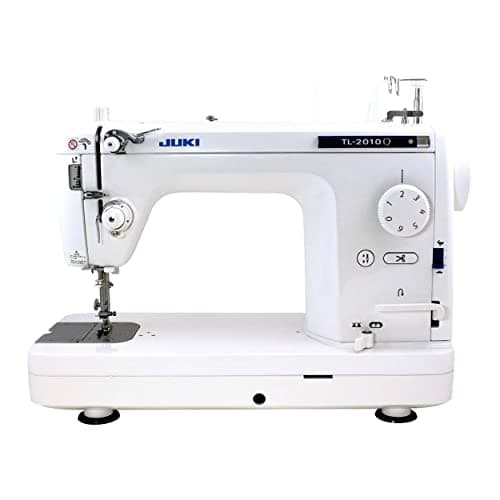
Juki
Juki TL-2010Q
Semi-professional straight-stitch tier
8.5 in wide by 6 in high of arm space, straight stitch only, at 1,500 stitches per minute. Six inches of usable height is the number to notice: it is the most vertical room of any domestic machine in this comparison, and height is what a rolled quilt actually consumes.
Skip it if: You need decorative stitches or a buttonhole. This machine does one stitch, in one direction, extremely well, and nothing else at all.
#ad Price as of October 18, 2026, from Amazon. Prices change. How this site is funded.
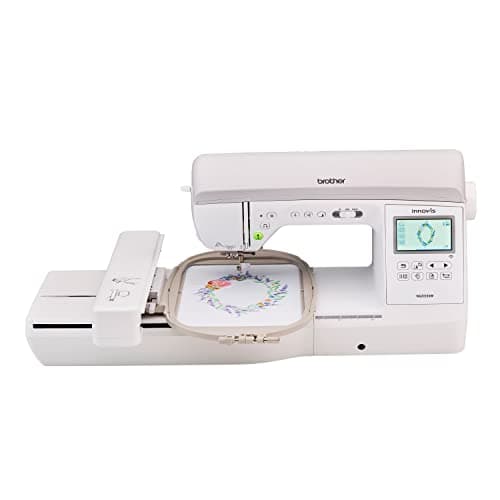
Brother
Brother NQ3550W
Premium combo tier
The largest embroidery field on a machine that still sews: 6 x 10 in, with 8.3 in of usable width beside the needle. This is the point at which one machine genuinely covers both jobs.
Skip it if: You embroider for money. At this price the four-needle machines start, and a four-needle machine changes colors without you.
#ad Price as of October 18, 2026, from Amazon. Prices change. How this site is funded.
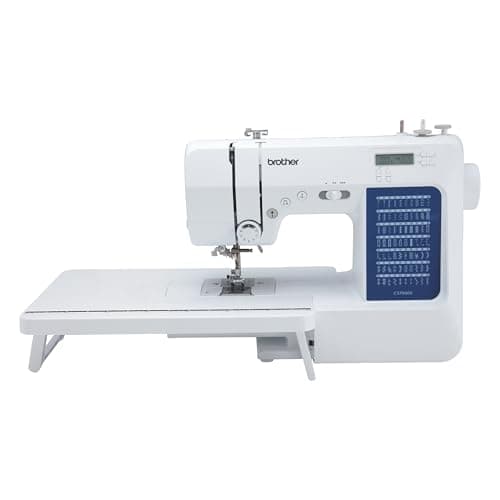
Brother
Brother CS7000X
Entry domestic tier
The cheapest machine Brother puts the word quilting on, and it earns part of it: a walking foot, a quilting foot, a quilt guide and a wide table are all in the box. What is not in the specification is a needle-to-arm figure - Brother publishes none for this machine, which is the one number quilting actually turns on.
Skip it if: You are quilting anything bigger than a throw. Brother publishes 750 spm and no throat figure here, against 1,500 spm and 8.7 in on the PQ1600S.
#ad Price as of October 18, 2026, from Amazon. Prices change. How this site is funded.
How this was ranked
Machines we claim to have tested: none. Everyone in this category says they tested twenty. We have not tested any, and we say so. What we did instead: built the candidate set from what Amazon actually stocks, read the published specification off each manufacturer’s own page, normalized every measurement into the same units and the same order, did the arithmetic on what each step up buys, and left every figure the maker does not publish visibly blank rather than filling it in. Every number on this page links to where it was published, so you can check the work in about five minutes.
- Sponsored placements
- 0
- Free machines accepted
- 0
- Specs linked to a maker page
- All
Questions people actually ask
Frequently asked
What is the difference between a quilting machine and a sewing machine?
A domestic quilting machine is a straight-stitch-only machine with a larger opening and roughly double the speed. The Juki TL-2010Q publishes 1 stitch, 1,500 spm and an 8.5 x 6 in opening; the Brother NQ3550W publishes 291 stitches and an 8.3 x 4.1 in opening. You trade the stitch library for the opening and the speed.
Can you use a quilting machine for regular sewing?
Only for straight seams. A straight-stitch quilting machine has no zigzag mechanism, so no buttonholes, no edge finishing, no stretch seams and no decorative stitches. Brother publishes zero buttonhole styles and one stitch selection for the PQ1600S. For straight seams it is better than almost any domestic.
Do you need a special sewing machine for quilting?
No. Any machine whose feed dogs drop and that takes a darning foot will free-motion quilt, and any machine at all will piece. What a dedicated quilting machine buys you is opening and speed, which start to matter at around twin size and become decisive at queen.
Is a quilting machine worth it if I already have a sewing machine?
That is the situation where it makes most sense - you keep the stitch library on the machine you own and add an opening half as big again. The honest test is whether you are already fighting the roll under the arm. If you are not, the money is better spent on a walking foot and an extension table.
Which is faster, a quilting machine or a sewing machine?
The quilting machine, usually by double. Juki publishes 1,500 spm for the TL-2010Q and Brother publishes 1,500 spm for the PQ1600S, against 750 spm for the CS7000X and no published figure at all for the NQ3550W. The gain shows up on long straight runs rather than on total project time.
Can a quilting machine do embroidery?
A straight-stitch quilting machine, no - it has no embroidery unit and no hoop mount. Some general-purpose machines marketed for quilting do both: the Brother NQ3550W publishes a 6 x 10 in embroidery field alongside its 291 sewing stitches.
Sources
Every specification on this page was read from one of these pages on 1 September 2026.