Guide
Domestic vs longarm quilting machines
The difference is not size. It is which thing moves - and once you see that, every other difference follows from it.
Heads up: the buy links on this page are affiliate links. If you buy through one we earn a commission at no extra cost to you. It does not change what we recommend or the order we rank things in - here is how we keep those separate.
The short answer
On a domestic machine you move the quilt. On a longarm you move the machine.
That single mechanical difference produces every other difference: the throat size, the price, the floor space, the skill required, and whether you can buy one online at all.
Domestic: quilt rolled up, passed through a throat of roughly 47 to 51 square inches, you steer the fabric.
Longarm: quilt stretched flat on rollers, machine head pushed along rails over it, nothing is rolled.
Why the rolling is the whole problem
On a domestic machine, quilting the middle of a large quilt means half of it has to be bunched up and fed through the gap between the needle and the machine body. A queen quilt rolled tight is a substantial cylinder.
It fights you the entire time. Every direction change drags the bulk against the machine. That is not a defect - it is geometry, and it is why throat opening is the specification this whole site is organized around.
A frame removes the problem by never rolling the quilt at all. It hangs stretched between rollers and the machine travels over it.
The numbers, side by side
| Domestic (best here) | Longarm (example) | |
|---|---|---|
| Example machine | Juki TL-2010Q | Handi Quilter Amara 20 |
| Published throat | 215 x 150 mm (8.5 x 6 in) | 20 in |
| Opening area | 51 sq in | The quilt is never rolled |
| Max speed | 1,500 spm | 2,500 spm |
| Floor space | A table | A dedicated frame, typically 8 to 12 ft |
| Buy online? | Yes | No - authorized dealers only |
| What moves | The quilt | The machine |
The Amara figures come from an authorized dealer listing, not the manufacturer: handiquilter.com returned HTTP 403 to our request on 1 September 2026, so we could not read their own specification page and we are not going to pretend we did.
The middle ground that actually exists
Between the two sits the semi-professional straight-stitch tier: the Juki TL series and the Brother PQ series. They are domestic machines in every respect except that they do one stitch extremely well, at 1,500 stitches per minute, with roughly 50 square inches of opening.
That is around half again the opening of a general-purpose domestic machine, for a small fraction of a longarm and with no frame. For a very large number of quilters it is the honest answer to “I have outgrown my machine”.
When a frame is actually the right answer
Three conditions, and you want at least two of them:
Size. You are regularly finishing queen and king quilts. Half a king rolled does not go comfortably through 6 inches of height, and no technique changes that.
Volume. You quilt for other people, or you finish more than a handful of large quilts a year. Loading a frame takes time; it pays back over many quilts, not one.
Space. A frame is 8 to 12 feet of dedicated floor that does not fold away. If it has to live in a shared room, this is the condition that decides it, and it decides it before price does.
The honest note about buying one
True longarms - Handi Quilter, Gammill, APQS, Innova, Bernina Q-series, Baby Lock longarms - are sold through authorized dealers and are not on Amazon. We checked every retail result on 1 September 2026 and every one was a dealer storefront.
So this site has no buy link for a longarm and will not have one. What we can do is tell you what the tier costs from named dealers and what to ask when you visit one, which is on the longarm cost page.
Skip this
Do not buy a frame to fix uneven stitches
Uneven free-motion stitches on a domestic machine are almost always quilt weight hanging off the table, or hand speed fighting machine speed. Both are free to fix. A frame changes how the quilt is held, not how you keep your hand speed steady - and frame quilting has its own learning curve on exactly that.
The picks
The domestic machines that get closest, and the frame machine you cannot buy here
The first two publish about 50 square inches of opening at 1,500 stitches per minute, without a frame or a dealer. The third is the tier above and carries no buy link, because there is no Amazon listing to link.
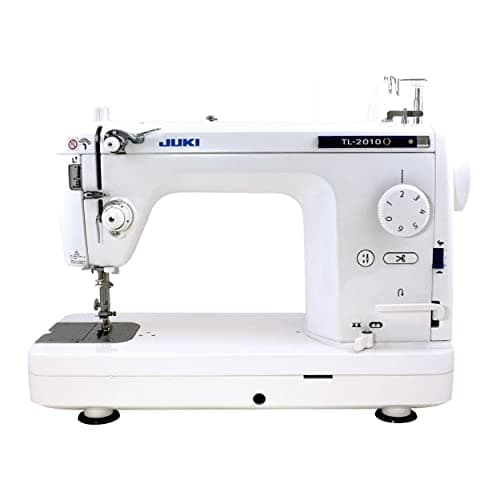
Juki
Juki TL-2010Q
Semi-professional straight-stitch tier
8.5 in wide by 6 in high of arm space, straight stitch only, at 1,500 stitches per minute. Six inches of usable height is the number to notice: it is the most vertical room of any domestic machine in this comparison, and height is what a rolled quilt actually consumes.
Skip it if: You need decorative stitches or a buttonhole. This machine does one stitch, in one direction, extremely well, and nothing else at all.
#ad Price as of October 18, 2026, from Amazon. Prices change. How this site is funded.
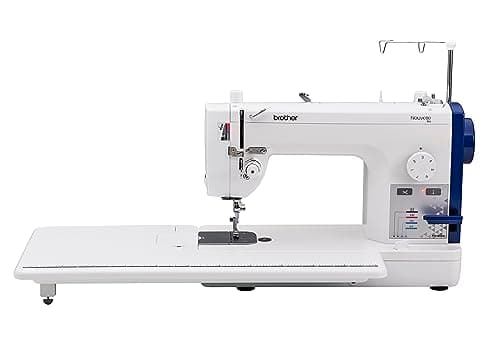
Brother
Brother PQ1600S
Semi-professional straight-stitch tier
8.7 in of throat width - wider than either Juki TL - with a published 11.1 x 23.3 in extension table and 1,500 spm. It trades 0.3 in of height for 0.2 in of width against the Juki, and adds a pin feed system the Juki has no equivalent for.
Skip it if: You want one machine to do everything. Like the Jukis, this is straight stitch only.
#ad Price as of October 18, 2026, from Amazon. Prices change. How this site is funded.
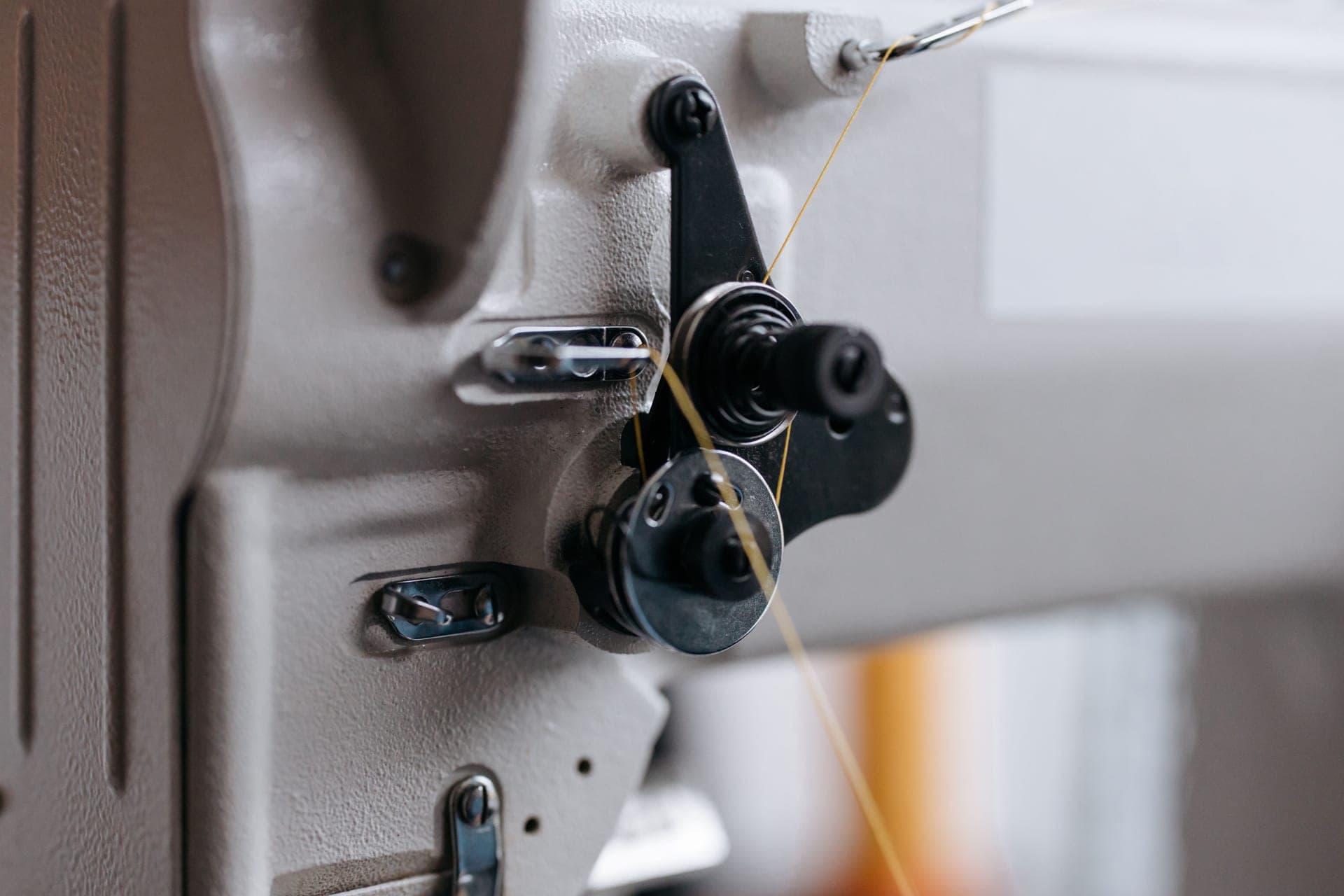
Handi Quilter
Handi Quilter Amara 20
Dealer purchase - authorized dealers only
20 inches of throat and 2,500 stitches per minute, roughly double the opening width of the widest domestic machine on this site. It is also not sold on Amazon, at any price, by anyone.
Skip it if: You are comparing it against a domestic machine on price. This is a different category of purchase, with a dealer, a delivery and a setup attached.
Dealer purchase
The Handi Quilter Amara 20 is not sold on Amazon by anyone, so there is no buy link here and there will not be one. It is an authorized-dealer purchase.
We earn nothing if you buy this machine. It is here because it answers the question, not because it pays.
How this was ranked
Machines we claim to have tested: none. Everyone in this category says they tested twenty. We have not tested any, and we say so. What we did instead: built the candidate set from what Amazon actually stocks, read the published specification off each manufacturer’s own page, normalized every measurement into the same units and the same order, did the arithmetic on what each step up buys, and left every figure the maker does not publish visibly blank rather than filling it in. Every number on this page links to where it was published, so you can check the work in about five minutes.
- Sponsored placements
- 0
- Free machines accepted
- 0
- Specs linked to a maker page
- All
Questions people actually ask
Frequently asked
What is the difference between a domestic and a longarm quilting machine?
On a domestic machine the quilt is rolled and moved through a fixed throat. On a longarm the quilt is stretched flat on a frame and the machine head is moved over it. Every other difference - throat size, price, floor space - follows from that.
Do I need a longarm to quilt a queen-size quilt?
No, but it is work. Around 6 inches of throat height - which Juki publishes for the TL series - handles a queen with effort. A king is genuinely hard on any domestic machine, and that is what frames exist for.
How much bigger is a longarm throat?
Much. An authorized dealer publishes 20 inches of throat for the Handi Quilter Amara 20, against 8.5 inches on the widest-opening domestic here. The more important difference is that a frame means the quilt is never rolled at all.
Is a mid-arm machine a good compromise?
The semi-professional straight-stitch tier - Juki TL series, Brother PQ series - is the genuine middle ground: roughly 50 square inches of opening at 1,500 stitches per minute, no frame, no dealer, and it still pieces.
Can I buy a longarm online?
Not from Amazon. Handi Quilter, Gammill, APQS, Innova, Bernina Q-series and Baby Lock longarms were all authorized-dealer only when we checked on 1 September 2026. That is why there is no buy button for any of them on this site.
Sources
Every specification on this page was read from one of these pages on 1 September 2026.