Skip to content

Roundup

The best quilting machines, ranked on the opening rather than the headline

The 10-inch machine on this page has the smallest throat opening of the six. That is not a trick - it is what happens when only one of the two dimensions gets advertised.

By Scooter M., enthusiastPublished September 1, 2026How we pick

Heads up: the buy links on this page are affiliate links. If you buy through one we earn a commission at no extra cost to you. It does not change what we recommend or the order we rank things in - here is how we keep those separate.

The shortlist

Ranked, with the numbers

Ranked on published manufacturer specifications, normalized to the same units, with the arithmetic on what each step up actually buys. Tap any row for the full write-up, including who should skip it.

#MachineBest forScorePrice
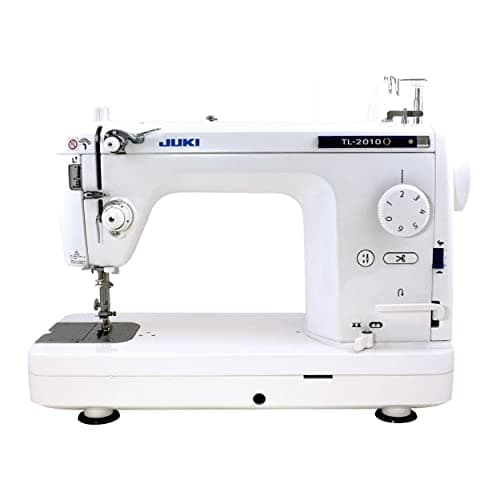
01A sewing machine needle stitching through fabric - a stand-in for the Juki TL-2010Q, not a photograph of this modelJuki TL-2010QFree-motion quilting a full-size quilt on a domestic machineBest overall9.1Check price on Amazon
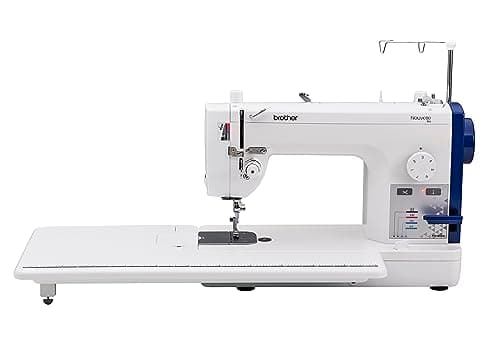
02A sewing machine needle stitching through fabric - a stand-in for the Brother PQ1600S, not a photograph of this modelBrother PQ1600SPiecing and quilting long straight runs at speedWidest throat8.8Check price on Amazon
03A sewing machine needle stitching through fabric - a stand-in for the Juki TL-2000Qi, not a photograph of this modelJuki TL-2000QiThe Juki arm size at the lowest priceBest value8.7Check price on Amazon
04Fabric feeding under the needle of a domestic sewing machine - a stand-in for the Janome Memory Craft 6700 Professional, not a photograph of this modelJanome Memory Craft 6700 ProfessionalOne machine for piecing, garment sewing and quiltingBest all-rounder8.5Check price on Amazon
05A sewing machine needle stitching through fabric - a stand-in for the Brother PQ1500SL, not a photograph of this modelBrother PQ1500SLThe PQ throat at whatever it is discounted toBest on discount8.4Check price on Amazon
06A domestic sewing machine on a table - a stand-in for the Brother NQ3550W, not a photograph of this modelBrother NQ3550WOne machine that has to do both quilting and embroidery wellBest that also embroiders8.8Check price on Amazon

Scores are ours and editorial. They are never published as review or rating markup, because we have not tested these machines - here is what we did instead.

The short answer

The Juki TL-2010Q wins, and it is not the widest machine on this page.

Juki publishes its arm as 215 mm wide by 150 mm high - 8.5 in by 6 in - at up to 1,500 stitches per minute. That is 51 square inches of opening.

The Janome MC6700P is advertised at 10 inches to the right of the needle and has 47.4 square inches, because Janome also publishes the height: 120 mm, or 4.72 in. The Juki is 15% narrower and has 8% more room.

Why width alone is the wrong number

What passes through a machine’s throat when you quilt is half the quilt, rolled up. That roll is a cylinder, and a cylinder passing through a rectangular opening is constrained by both dimensions - mostly by the smaller one.

Manufacturers quote width because it is the bigger number and because it is what buyers ask for. Height is published inconsistently and sometimes not at all. The result is a market where the advertised ranking and the actual ranking are different.

Published throat dimensions for the machines on this page, normalized to width by height
MachineOpening (W x H)AreaMax speedStitches
Juki TL-2010Q8.5 in x 6.0 in51.0 sq in1,500 spmStraight stitch only
Juki TL-2000Qi8.5 in x 6.0 in51.0 sq in1,500 spmStraight stitch only
Brother PQ1600S8.7 in x 5.7 in49.6 sq in1,500 spmStraight stitch only
Brother PQ1500SL8.6 in x 5.7 in49.0 sq in1,500 spmStraight stitch only
Janome MC6700P10.04 in x 4.72 in47.4 sq in1,200 spm200 stitches
Brother NQ3550W8.3 in x 4.1 in34.0 sq inNot published291 stitches

The order reverses

By advertised width: Janome MC6700P (10.04 in), Brother PQ1600S (8.7 in), Brother PQ1500SL (8.6 in), Juki (8.5 in).

By actual opening area: Juki (51.0 sq in), PQ1600S (49.6), PQ1500SL (49.0), Janome (47.4).

The machine that leads on the number everyone quotes finishes last on the number that decides whether the quilt fits. The full working for every machine on this site is on the normalized throat chart.

The trade you are actually making

The top four machines here are straight-stitch specialists. They do one stitch, in one direction, at 1,500 stitches per minute. No zigzag, no buttonhole, no decorative stitches, nothing.

The Janome MC6700P does 200 stitches at 1,200 spm and gives up an inch of opening to do it. That is the real decision on this page, and it is not close if quilting is the priority: a straight-stitch machine that also pieces beautifully covers everything a quilt needs, and if you also make garments you probably already own a machine that zigzags.

Speed matters more here than it does on embroidery machines

1,500 stitches per minute against 1,200 is 25% faster, and unlike embroidery - where the stitching is unattended - you are steering every inch of a free-motion quilting line. Faster stitching at the same hand speed means denser, more even stitches, which is exactly the thing that separates good free-motion work from wobbly free-motion work.

It also means less time. A densely quilted queen top is hours of machine time, and 25% of several hours is an afternoon.

Skip this

Skip the NQ3550W if quilting is the reason you are buying

It is on this page because it is a genuinely good machine and people cross-shop it, but the numbers are clear: Brother publishes 8.3 x 4.1 in of usable space, which is 34 square inches - a third less opening than the Juki - and no maximum speed figure at all.

What it does instead is embroider, with a 6 x 10 in field. If you want one machine for quilting and embroidery, that is a real argument. If you want a quilting machine, buy one.

What is not on this page, and why

True longarms. Handi Quilter, Gammill, APQS, Innova, Bernina Q-series and Baby Lock longarms are sold through authorized dealers and are not on Amazon - we checked every retail result on 1 September 2026 and every one was a dealer storefront.

They solve this problem completely, at a price and with a frame that needs a room. We cover the tier honestly on the longarm cost page, with real dealer-published prices and no buy button, because there is no buy button that could exist.

The write-ups

Every pick, in full

01 / Best overall

A sewing machine needle stitching through fabric - a stand-in for the Juki TL-2010Q, not a photograph of this model

Juki

9.1 / 10

Semi-professional straight-stitch tier

Juki TL-2010Q

8.5 in wide by 6 in high of arm space, straight stitch only, at 1,500 stitches per minute. Six inches of usable height is the number to notice: it is the most vertical room of any domestic machine in this comparison, and height is what a rolled quilt actually consumes.

Check price on Amazon

#ad We hold no verified live price for this machine, so we show none. How this site is funded.

Published specifications for the Juki TL-2010Q, with the source of each
SpecificationPublished valueWhere it is published
Arm size (throat)215 mm wide x 150 mm high (8.5 in x 6 in)Published as "215(W) x 150(H)mm / 8.5"(W) x 6"(H)"Juki household TL-2010Q specification table
Maximum sewing speed1,500 stitches per minute (minimum 55)Juki household TL-2010Q specification table
Stitch length0 mm to 6 mmJuki household TL-2010Q specification table
Machine dimensions452 mm x 350 mm x 219 mmJuki household TL-2010Q specification table
Weight11.5 kg (25.4 lb)Juki household TL-2010Q specification table
Needle systemHA x 1 (130/705H) / HL x 5, sizes 9 to 18Juki household TL-2010Q specification table

The arithmetic

8.5 x 6 in is 51 sq in of throat opening. A 10 x 4.7 in machine is 47 sq in: wider, but smaller.

Throat width gets quoted and throat height does not, which is how a 10 in machine ends up sounding roomier than an 8.5 in one. 8.5 x 6 = 51 sq in. 10.04 x 4.72 = 47.4 sq in. The Juki has 8% more opening despite being 15% narrower, because a rolled quilt is a cylinder and a cylinder needs height.

What it does well

  • 6 in of usable height, more vertical room than any other domestic machine here
  • 1,500 spm, matched only by the Brother PQ machines
  • Juki publishes the arm size in both mm and inches, and labels which figure is width
  • Aluminum die-cast body at 11.5 kg keeps it stable at full speed

What it does not

  • Straight stitch only: no zigzag, no buttonhole, no decorative stitches
  • 8.5 in of width is narrower than several domestics that are worse machines for quilting

Skip this one if

You need decorative stitches or a buttonhole. This machine does one stitch, in one direction, extremely well, and nothing else at all.

How it scores, by criterion

Room to work9.0
What it upgrades from9.5
Value for the tier9.0
Headroom before the next upgrade8.0
Spec transparency10.0

02 / Widest throat

A sewing machine needle stitching through fabric - a stand-in for the Brother PQ1600S, not a photograph of this model

Brother

8.8 / 10

Semi-professional straight-stitch tier

Brother PQ1600S

The widest domestic throat here at 8.7 in, with a published 11.1 x 23.3 in extension table and 1,500 spm. It trades 0.3 in of height for 0.2 in of width against the Juki, and adds a pin feed system the Juki has no equivalent for.

Check price on Amazon

#ad We hold no verified live price for this machine, so we show none. How this site is funded.

Published specifications for the Brother PQ1600S, with the source of each
SpecificationPublished valueWhere it is published
Needle-to-arm space8.7 in wide x 5.7 in highPublished as "5.7" x 8.7" needle-to-arm space" - Brother lists this one height-first, the reverse of its SE and NQ pagesBrother PQ1600S product page
Extension table11.1 in x 23.3 inBrother PQ1600S product page
Maximum sewing speed1,500 stitches per minuteBrother PQ1600S product page
Feed systemFour color-coded levels of feed dog adjustment, plus a pin feed mechanism that swaps the feed dogs for a single pinBrother PQ1600S product page
Knee lifterIncludedBrother PQ1600S product page

What it does well

  • 8.7 in is the widest domestic throat in this comparison
  • The extension table dimensions are actually published, which is rare
  • Pin feed handles delicate fabric without feed dog marks
  • 1,500 spm with a knee lifter included

What it does not

  • 5.7 in of height against the Juki's 6 in: 3% less opening despite being wider
  • Straight stitch only
  • Brother publishes this figure height-first and its embroidery figures width-first, with no label saying which is which

Skip this one if

You want one machine to do everything. Like the Jukis, this is straight stitch only.

How it scores, by criterion

Room to work8.5
What it upgrades from9.0
Value for the tier9.0
Headroom before the next upgrade8.0
Spec transparency7.0

03 / Best value

A sewing machine needle stitching through fabric - a stand-in for the Juki TL-2000Qi, not a photograph of this model

Juki

8.7 / 10

Semi-professional straight-stitch tier

Juki TL-2000Qi

The same 215 x 150 mm arm and the same 1,500 spm as the TL-2010Q, without the automatic thread trimmer. If budget is the constraint, the sewing is identical.

Check price on Amazon

#ad We hold no verified live price for this machine, so we show none. How this site is funded.

Published specifications for the Juki TL-2000Qi, with the source of each
SpecificationPublished valueWhere it is published
Arm size (throat)215 mm wide x 150 mm high (8.5 in x 6 in)Published as "215(W) x 150(H)mm / 8.5"(W) x 6"(H)"Juki household TL-2000Qi specification table
Maximum sewing speed1,500 stitches per minute (minimum 55)Juki household TL-2000Qi specification table
Auxiliary table590 mm x 335 mm (23 in wide x 13 in deep)Juki household TL-2000Qi specification table
Stitch length0 mm to 6 mmJuki household TL-2000Qi specification table
Weight11.5 kg (25.4 lb)Juki household TL-2000Qi specification table

What it does well

  • Identical 51 sq in throat opening to the TL-2010Q
  • The 23 x 13 in auxiliary table is included, and its dimensions are published
  • Cheapest route to 6 in of usable throat height

What it does not

  • No automatic thread trimmer
  • Straight stitch only

Skip this one if

You free-motion quilt for hours at a time. The thread trimmer on the 2010Q is the difference between finishing a line and reaching for scissors, several hundred times a quilt.

How it scores, by criterion

Room to work9.0
What it upgrades from9.0
Value for the tier9.5
Headroom before the next upgrade8.0
Spec transparency10.0

04 / Best all-rounder

Fabric feeding under the needle of a domestic sewing machine - a stand-in for the Janome Memory Craft 6700 Professional, not a photograph of this model

Janome

8.5 / 10

Upper domestic tier

Janome Memory Craft 6700 Professional

10 inches to the right of the needle and 200 built-in stitches: the widest machine here that still does everything a domestic machine does. The catch is 120 mm of height, the lowest opening in this comparison.

Check price on Amazon

#ad We hold no verified live price for this machine, so we show none. How this site is funded.

Published specifications for the Janome Memory Craft 6700 Professional, with the source of each
SpecificationPublished valueWhere it is published
Work space255 mm x 120 mm (10.04 in wide x 4.72 in high)Published as "255 x 120 (mm)"; the same page also states "10 inches (255mm) to the right of the needle"Janome Global MC6700 Professional product page
Maximum sewing speed1,200 stitches per minuteJanome Global MC6700 Professional product page
Built-in stitches200Janome Global MC6700 Professional product page
Machine dimensions516 mm x 300 mm x 220 mmJanome Global MC6700 Professional product page
Weight11 kg (24.3 lb)Janome Global MC6700 Professional product page

What it does well

  • 10.04 in of width, the widest domestic here
  • 200 stitches, so it is a real general-purpose machine as well as a quilting one
  • Janome publishes the workspace as an explicit width by height pair in millimeters

What it does not

  • 120 mm (4.72 in) of height is the lowest opening in this comparison
  • 1,200 spm against 1,500 on the straight-stitch machines

Skip this one if

Your bottleneck is a king-size quilt rolled under the arm. Extra width does not help if the roll will not clear 4.7 in of height.

How it scores, by criterion

Room to work8.0
What it upgrades from9.0
Value for the tier8.0
Headroom before the next upgrade7.5
Spec transparency9.5

05 / Best on discount

A sewing machine needle stitching through fabric - a stand-in for the Brother PQ1500SL, not a photograph of this model

Brother

8.4 / 10

Semi-professional straight-stitch tier

Brother PQ1500SL

The PQ1600S's predecessor: 0.1 in narrower on paper and otherwise the same proposition at 1,500 spm with a knee lifter. Buy on price alone.

Check price on Amazon

#ad We hold no verified live price for this machine, so we show none. How this site is funded.

Published specifications for the Brother PQ1500SL, with the source of each
SpecificationPublished valueWhere it is published
Work space (needle to arm)8.6 in wide x 5.7 in highPublished as "5.7" x 8.6"" work space areaBrother PQ1500SL product page
Maximum sewing speed1,500 stitches per minuteBrother PQ1500SL product page
Knee lifterIncludedBrother PQ1500SL product page
Extension tableIncluded; Brother does not publish its dimensions for this modelBrother PQ1500SL product page

What it does well

  • 49 sq in of throat opening for typically less than the PQ1600S
  • 1,500 spm and a knee lifter

What it does not

  • 0.1 in narrower than the PQ1600S and otherwise identical on paper
  • Table size not published
  • Straight stitch only

Skip this one if

The PQ1600S is close in price. The newer machine is the same money for slightly more room and a published table size.

How it scores, by criterion

Room to work8.5
What it upgrades from8.5
Value for the tier9.0
Headroom before the next upgrade8.0
Spec transparency6.5

06 / Best that also embroiders

A domestic sewing machine on a table - a stand-in for the Brother NQ3550W, not a photograph of this model

Brother

8.8 / 10

Premium combo tier

Brother NQ3550W

The largest embroidery field on a machine that still sews: 6 x 10 in, with 8.3 in of usable width beside the needle. This is the point at which one machine genuinely covers both jobs.

Check price on Amazon

#ad We hold no verified live price for this machine, so we show none. How this site is funded.

Published specifications for the Brother NQ3550W, with the source of each
SpecificationPublished valueWhere it is published
Maximum embroidery area6 in x 10 inPublished as "6" x 10"" embroidery hoop capacityBrother NQ3550W product page
Work area (needle to arm)8.3 in wide x 4.1 in highPublished as "8.3" x 4.1" of usable space"Brother NQ3550W product page
Built-in embroidery designs258Brother NQ3550W product page
Built-in sewing stitches291Brother NQ3550W product page
Display3.67 in color LCD touchscreenBrother NQ3550W product page
Maximum embroidery speedBrother does not publish a figure for this modelBrother NQ3550W product page

The arithmetic

6 x 10 in is 60 sq in. 5 x 7 in is 35. That is 71% more design area for one step up.

60 / 35 = 1.71. The jump matters most for anything with a long axis - a name across a back, a border on a towel, a quilt label - because a 10 in dimension removes the split that a 7 in field forces.

What it does well

  • 60 sq in of design area, 71% more than a 5 x 7 in machine
  • 8.3 in of usable width is the widest of any combo machine here
  • Wireless design transfer

What it does not

  • 4.1 in of usable height is unchanged from an entry machine, and width is not the only dimension a quilt needs
  • No published embroidery speed

Skip this one if

You embroider for money. At this price the four-needle machines start, and a four-needle machine changes colors without you.

How it scores, by criterion

Room to work9.0
What it upgrades from9.0
Value for the tier8.0
Headroom before the next upgrade8.5
Spec transparency8.0

How this was ranked

Machines we claim to have tested: none. Everyone in this category says they tested twenty. We have not tested any, and we say so. What we did instead: built the candidate set from what Amazon actually stocks, read the published specification off each manufacturer’s own page, normalized every measurement into the same units and the same order, did the arithmetic on what each step up buys, and left every figure the maker does not publish visibly blank rather than filling it in. Every number on this page links to where it was published, so you can check the work in about five minutes.

Sponsored placements
0
Free machines accepted
0
Specs linked to a maker page
All

The full method, including what we refuse to claim
Questions people actually ask

Frequently asked

What is a good sewing machine for quilting?

One with a large throat opening measured in both dimensions and a high straight-stitch speed. The Juki TL-2010Q publishes 215 x 150 mm (8.5 x 6 in) at up to 1,500 stitches per minute, which is the most opening and the joint fastest of any domestic machine here.

How much throat space do I need for quilting?

It depends on the finished quilt, because what passes through is half the quilt rolled up. Around 6 inches of usable height handles a throw or twin comfortably; a queen is a struggle on any domestic machine and a king needs a frame. The banded arithmetic is on our throat space guide.

Is a straight-stitch-only machine worth it for quilting?

For quilting specifically, yes. The four fastest machines here do one stitch at 1,500 spm and have the largest openings. If you also make garments you likely already own a machine that zigzags, and buying a specialist for the quilting is the better split.

Why is the 10-inch machine ranked below the 8.5-inch one?

Because Janome publishes the height as well: 255 x 120 mm, so 10.04 x 4.72 in = 47.4 square inches. Juki publishes 215 x 150 mm = 51.0 square inches. The wider machine has the smaller opening, and a rolled quilt cares about both dimensions.

Do I need a longarm to quilt a king-size quilt?

Practically, on a domestic machine a king is very hard - half a king rolled is thicker than any 6-inch opening comfortably takes. That is what frames exist for. The honest cost picture, with real dealer prices, is on the longarm cost page.

Sources

Every specification on this page was read from one of these pages on 1 September 2026.

Read next