Head to head
Juki TL-2010Q vs Brother PQ1600S
The closest comparison on this site. Three percent separates them on opening, both run at 1,500 stitches per minute, and the features decide it.
Heads up: the buy links on this page are affiliate links. If you buy through one we earn a commission at no extra cost to you. It does not change what we recommend or the order we rank things in - here is how we keep those separate.
The short answer
The Juki for free-motion quilting. The Brother for delicate fabric and a bigger published table.
Juki publishes 215 x 150 mm (8.5 x 6 in) - 51.0 square inches - at 1,500 spm, with an automatic thread trimmer and an aluminum die-cast body at 11.5 kg.
Brother publishes 8.7 x 5.7 in - 49.6 square inches - at 1,500 spm, with an 11.1 x 23.3 in table, a knee lifter, four color-coded feed dog levels and a pin feed mechanism.
2.8% separates them on opening. Everything else is features.
Side by side
| Specification | Juki TL-2010Q | Brother PQ1600S |
|---|---|---|
| Throat width | 8.5 in (215 mm) | 8.7 in |
| Throat height | 6.0 in (150 mm) | 5.7 in |
| Opening area | 51.0 sq in | 49.6 sq in |
| Maximum speed | 1,500 spm (min 55) | 1,500 spm |
| Stitch length | 0 to 6 mm | Not published on the product page |
| Automatic thread trimmer | Yes | Not listed |
| Knee lifter | Not listed on the specification table | Included |
| Extension table | Not published for this model | 11.1 x 23.3 in |
| Feed dog adjustment | Drop for free motion | Four color-coded levels, plus pin feed |
| Weight | 11.5 kg (25.4 lb) | Not published on the product page |
| How the throat is published | Labeled: "215(W) x 150(H)mm" | Unlabelled, height first: "5.7" x 8.7"" |
The 3%, and why the shape matters more than the area
Juki: 8.5 x 6.0 = 51.0 sq in
Brother: 8.7 x 5.7 = 49.6 sq in
The Juki has 2.8% more opening. That is close enough to call a tie on area.
The shape is not a tie. The Juki has 5% more height, and height is the dimension a rolled quilt runs out of first. For quilting a queen, that is worth more than the 2% of extra width the Brother has.
Feature by feature, where the decision actually is
The automatic thread trimmer - Juki
On free-motion quilting, a densely quilted top has several hundred starts and stops. Each one on a machine without a trimmer is a reach for scissors. That is the single biggest practical difference on this page for anyone who free-motion quilts.
The pin feed and four feed levels - Brother
Brother publishes four color-coded levels of feed dog adjustment plus a pin feed that swaps the dogs for a single pin. The graduated levels give a middle ground between fully engaged and fully dropped; the pin feed advances delicate fabric without leaving feed dog marks.
Nothing else on this site has either feature. If you sew velvet, satin or fine silk, it is the reason to buy this machine.
The published table - Brother
11.1 x 23.3 in, published. Juki does not publish a table size for the TL-2010Q (it does publish 590 x 335 mm for the TL-2000Qi). Supporting surface is the biggest fixable cause of poor free-motion stitching, so knowing what you are getting matters.
How the number is published - Juki
Juki writes “215(W) x 150(H)mm / 8.5″(W) x 6″(H)”. Brother writes “5.7″ x 8.7″” with no labels, height first, having published its embroidery machines width first.
We had to resolve Brother’s order against physical geometry. That is a small thing and it is exactly the kind of small thing that makes shopping harder than it needs to be - more on it in harp space versus throat space.
Who should buy each
Buy the Juki if free-motion quilting is your main use. More height, the thread trimmer, and a die-cast body that stays put at 1,500 spm.
Buy the Brother if you sew delicate fabric, want the graduated feed control, or value the knee lifter and the published table size. The knee lifter is genuinely underrated - both hands stay on the quilt while you pivot.
Skip this
Neither - get the Janome MC6700P if you need one machine for everything
Both machines here are straight stitch only. No zigzag, no buttonhole, no decorative stitches.
The Janome MC6700P publishes 200 stitches at 1,200 spm with 255 x 120 mm of workspace. You give up 300 stitches per minute and about 7% of the opening, and you get a machine that also makes garments.
The picks
Both machines, and the one that also zigzags
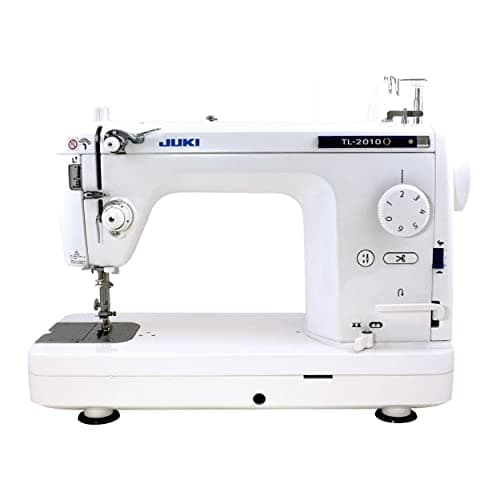
Juki
Juki TL-2010Q
Semi-professional straight-stitch tier
8.5 in wide by 6 in high of arm space, straight stitch only, at 1,500 stitches per minute. Six inches of usable height is the number to notice: it is the most vertical room of any domestic machine in this comparison, and height is what a rolled quilt actually consumes.
Skip it if: You need decorative stitches or a buttonhole. This machine does one stitch, in one direction, extremely well, and nothing else at all.
#ad Price as of October 18, 2026, from Amazon. Prices change. How this site is funded.
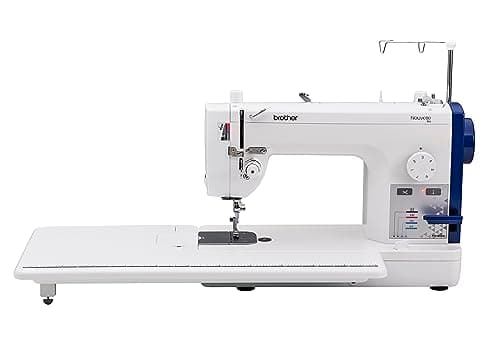
Brother
Brother PQ1600S
Semi-professional straight-stitch tier
8.7 in of throat width - wider than either Juki TL - with a published 11.1 x 23.3 in extension table and 1,500 spm. It trades 0.3 in of height for 0.2 in of width against the Juki, and adds a pin feed system the Juki has no equivalent for.
Skip it if: You want one machine to do everything. Like the Jukis, this is straight stitch only.
#ad Price as of October 18, 2026, from Amazon. Prices change. How this site is funded.
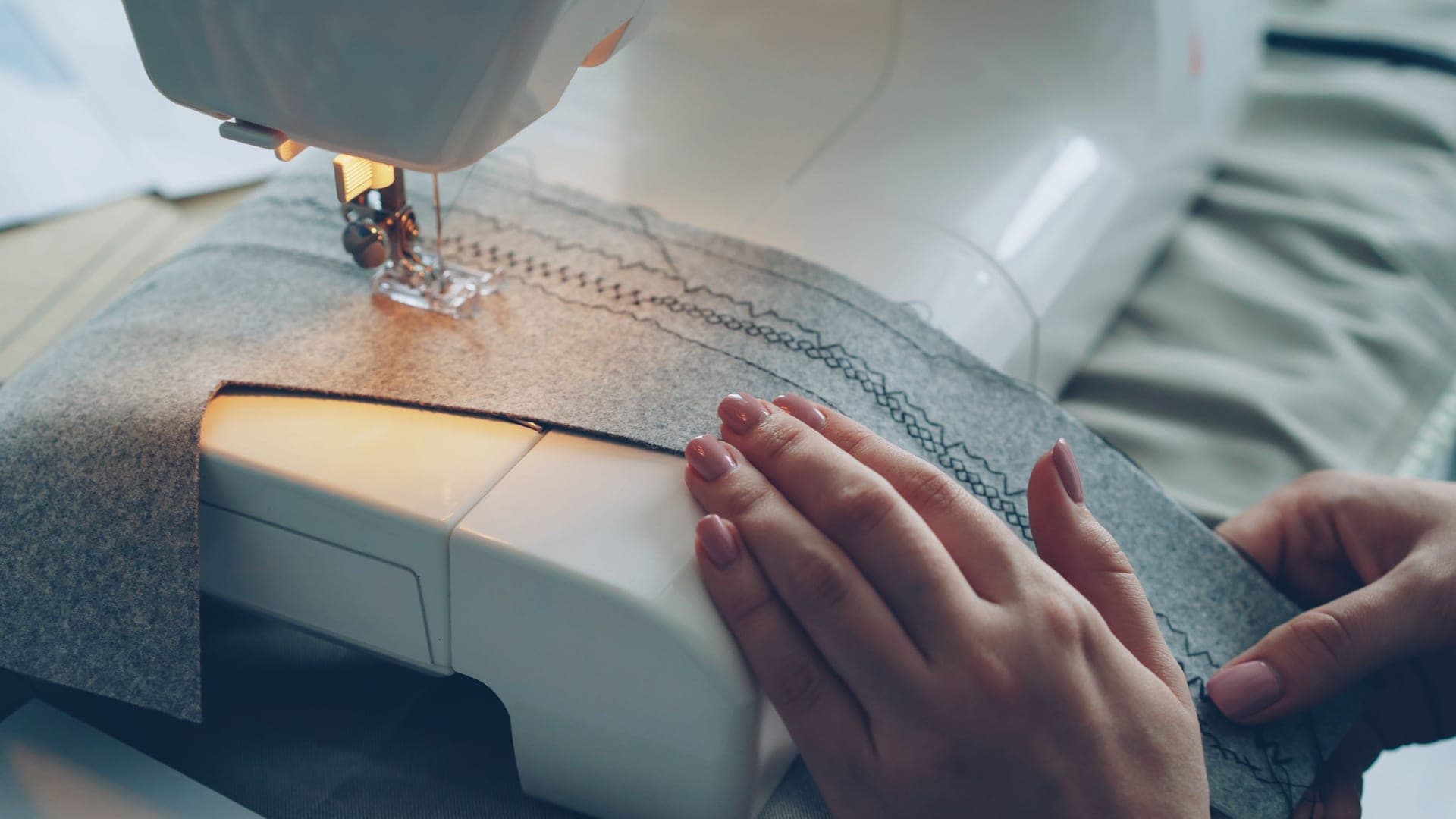
Janome
Janome Memory Craft 6700 Professional
Upper domestic tier
10 inches to the right of the needle and 200 built-in stitches: the widest machine here that still does everything a domestic machine does. The catch is 120 mm of height, the lowest opening in this comparison.
Skip it if: Your bottleneck is a king-size quilt rolled under the arm. Extra width does not help if the roll will not clear 4.7 in of height.
#ad We hold no verified live price for this machine, so we show none. How this site is funded.
How this was ranked
Machines we claim to have tested: none. Everyone in this category says they tested twenty. We have not tested any, and we say so. What we did instead: built the candidate set from what Amazon actually stocks, read the published specification off each manufacturer’s own page, normalized every measurement into the same units and the same order, did the arithmetic on what each step up buys, and left every figure the maker does not publish visibly blank rather than filling it in. Every number on this page links to where it was published, so you can check the work in about five minutes.
- Sponsored placements
- 0
- Free machines accepted
- 0
- Specs linked to a maker page
- All
Questions people actually ask
Frequently asked
Juki TL-2010Q or Brother PQ1600S?
The Juki for free-motion quilting - 5% more throat height and an automatic thread trimmer. The Brother for delicate fabric and graduated feed control - four feed dog levels, a pin feed mechanism, a knee lifter and a published 11.1 x 23.3 in table.
Which has more throat space?
The Juki, marginally: 8.5 x 6.0 in is 51.0 square inches against the Brother’s 8.7 x 5.7 in at 49.6. The Brother is wider; the Juki is taller, and height binds first on a rolled quilt.
Are both machines straight stitch only?
Yes. Neither does zigzag, buttonholes or decorative stitches. That is what buys the 1,500 stitches per minute and the large opening on both.
Which is faster?
Neither - both publish 1,500 stitches per minute. Juki additionally publishes a minimum of 55 spm, which matters for slow, controlled free-motion work.
What is a pin feed and do I need it?
A Brother mechanism that replaces the feed dogs with a single pin passing through the fabric, so delicate material is advanced without feed dog marks. You need it if you sew velvet, satin or fine silk; for cotton quilting it does nothing.
Sources
Every specification on this page was read from one of these pages on 1 September 2026.