The short answer
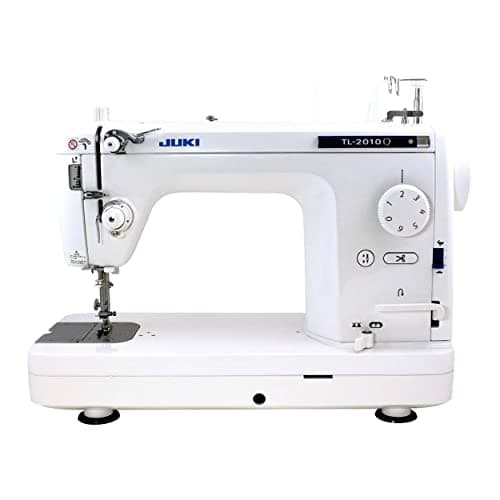
The Juki TL-2010Q - the only machine here whose maker publishes both a weight and a footprint.
Juki publishes 11.5 kg (25.4 lb) and machine dimensions of 452 x 350 x 219 mm, along with 8.5 x 6.0 in of arm space at 1,500 stitches per minute. Its own Amazon listing calls it a portable machine.
That combination - a real weight, a real footprint, and 51 square inches of opening once it is on the table - is what portable has to mean for a quilter. A machine you can lift but cannot quilt on is not a portable quilting machine.
How we judged this
Portability is three published figures and one question, and the frustrating part is how rarely all three are published.
1. Published weight
The number that decides whether the machine goes to a class. Juki publishes 11.5 kg for the TL-2010Q. Janome publishes 14.5 kg (32 lb) for the HD8. Brother publishes no weight at all for the PQ1600S, which is a real gap on a machine people carry.
2. Published footprint
Trunk space and bench space are different constraints and both are physical. Juki publishes 452 x 350 x 219 mm; Janome publishes W 19.6 x D 8.5 x H 13 in. Brother publishes neither for the PQ1600S.
3. Whether the table travels, and whether its size is published
A straight-stitch machine without its extension table is much less useful for quilting, so the table is part of the load. Brother publishes 11.1 x 23.3 in for the PQ1600S table - the only extension table dimension published for any machine on this page. Janome includes a table with the HD8 but does not publish its size. Juki publishes 590 x 335 mm for the TL-2000Qi’s table but not for the TL-2010Q’s.
4. Is it still worth carrying when it arrives?
A light machine with a small opening is a sewing machine you took to a quilting class. Every machine here publishes at least 49 square inches of throat opening, which is the floor for this to be a quilting purchase rather than a portability one.
The three machines, on published numbers
Portability-relevant specifications, from each maker's own product page| Machine | Weight | Machine dimensions | Extension table | Opening | Speed |
|---|
| Juki TL-2010Q | 11.5 kg (25.4 lb) | 452 x 350 x 219 mm | Included; size not published for this model | 8.5 x 6.0 in = 51.0 sq in | 1,500 spm |
|---|
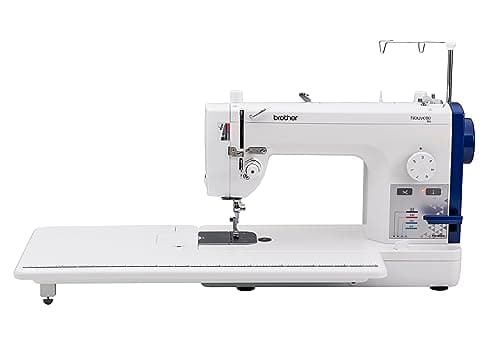
| Brother PQ1600S | Not published | Not published | 11.1 x 23.3 in, published | 8.7 x 5.7 in = 49.6 sq in | 1,500 spm |
|---|
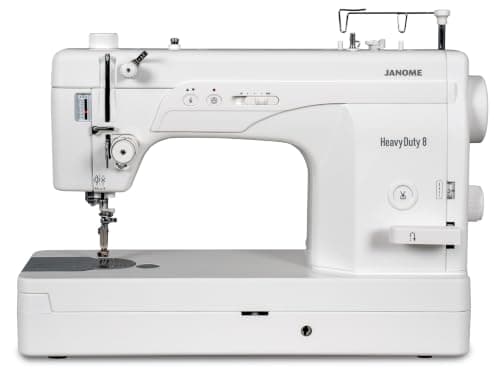
| Janome HD8 | 14.5 kg (32 lb) | W 19.6 x D 8.5 x H 13 in | Included; size not published | 9 x 5.5 in = 49.5 sq in | 1,600 spm |
|---|
Three machines, and between them the makers publish weight twice, footprint twice and a table size once. That is the honest state of this category, and it is why the ranking leans on the figures that exist rather than on the word portable.
What 3 kg actually means when you are carrying it
Juki TL-2010Q: 11.5 kg. Janome HD8: 14.5 kg. The difference is 3 kg, or about 26% more to lift.
For context, 11.5 kg is roughly a large bag of cat litter and 14.5 kg is roughly a full carry-on suitcase. Both are two-handed lifts; only one is a comfortable one-trip-from-the-car lift.
Then add the extension table and the foot pedal. Portability in this category is a two-trip problem for every machine here, and the weight figure decides whether the first trip is pleasant.
Why each machine placed where it did
1. Juki TL-2010Q - lightest published weight, largest opening
11.5 kg, a published footprint, 51 square inches of opening, 1,500 spm and an automatic thread trimmer. It is the machine that wins our main quilting roundup on the opening, and it happens to also be the lightest thing here.
The honest drawback: Juki does not publish the extension table size for this model, so you cannot check it against a car trunk before buying. It is also straight stitch only - no zigzag, no buttonhole - so it travels as a second machine rather than an only machine.
2. Brother PQ1600S - the table you can actually plan around
The only machine on this page whose extension table size Brother publishes: 11.1 x 23.3 in. It also includes a knee lifter and publishes 8.7 x 5.7 in of needle-to-arm space at 1,500 spm.
The honest drawback, and it is the big one here: Brother publishes no weight and no machine dimensions for it. On a page about portability that is the specification you most want, and its absence is the reason it does not rank first despite being the cheapest machine here.
3. Janome HD8 - the fastest, and the heaviest
Janome publishes 1,600 stitches per minute - the fastest figure on this site - along with 9 in of throat width, a knee lift, an automatic thread cutter and a published footprint.
The honest drawback: 14.5 kg is the heaviest here, and 5.5 in of throat height is the shallowest of the three, so a rolled quilt runs out of room sooner. It is the best machine here to arrive at a class with and the worst one to carry there.
The machine we could not include
Janome publishes 11 kg (24.3 lb) for the Memory Craft 6700 Professional, which is the lightest published weight of any quilting machine on this site - lighter than the Juki. It is not a pick here because we have no current Amazon listing for it, and this site does not put a buy button on a machine it cannot verify you can buy today.
If you find one through a dealer it is a genuinely light machine with 200 stitches, at the cost of the shallowest opening in the group - 10.04 x 4.72 in, which is 47.4 square inches. Its full write-up is on the MC6700P review.
Skip this
Skip all three if the machine never actually leaves the house
Weight only matters if you carry it. If the machine lives on one table permanently, every figure on this page is noise and you should be ranking on throat opening instead - which is what the main quilting roundup does.
And if the real problem is that a full-size quilt will not fit through the machine you own, portability is the wrong question entirely. How much throat space you need works that out against your quilt size.
Choosing in two questions
How far are you carrying it? Car to classroom a few times a year: any of these. Regularly, up stairs, alone: the Juki, on the only published weight that is comfortably under 12 kg.
Does the table travel with it? If yes, the PQ1600S is the only one whose table you can measure before you buy. If you quilt on a fixed table at the destination, the table size stops mattering and the weight decides.