Skip to content

Roundup

The best sewing machines for free motion quilting

In free motion you set the stitch length with your hands. That makes machine speed a quality specification, not just a time-saving one.

By Scooter M., enthusiastPublished September 1, 2026How we pick

Heads up: the buy links on this page are affiliate links. If you buy through one we earn a commission at no extra cost to you. It does not change what we recommend or the order we rank things in - here is how we keep those separate.

The shortlist

Ranked, with the numbers

Ranked on published manufacturer specifications, normalized to the same units, with the arithmetic on what each step up actually buys. Tap any row for the full write-up, including who should skip it.

#MachineBest forScorePrice
01A sewing machine needle stitching through fabric - a stand-in for the Juki TL-2010Q, not a photograph of this modelJuki TL-2010QFree-motion quilting a full-size quilt on a domestic machineBest for free motion9.1Check price on Amazon
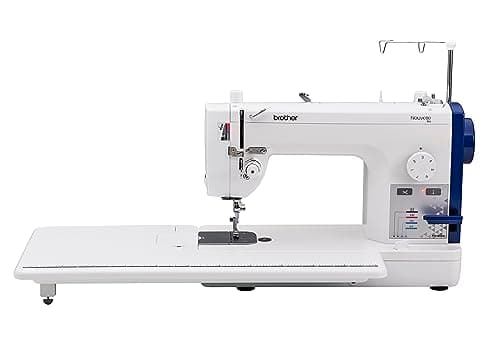
02A sewing machine needle stitching through fabric - a stand-in for the Brother PQ1600S, not a photograph of this modelBrother PQ1600SPiecing and quilting long straight runs at speedBest feed control8.8Check price on Amazon
03A sewing machine needle stitching through fabric - a stand-in for the Juki TL-2000Qi, not a photograph of this modelJuki TL-2000QiThe Juki arm size at the lowest priceBest value8.7Check price on Amazon
04Fabric feeding under the needle of a domestic sewing machine - a stand-in for the Janome Memory Craft 6700 Professional, not a photograph of this modelJanome Memory Craft 6700 ProfessionalOne machine for piecing, garment sewing and quiltingBest all-purpose option8.5Check price on Amazon

Scores are ours and editorial. They are never published as review or rating markup, because we have not tested these machines - here is what we did instead.

The short answer

The Juki TL-2010Q: 1,500 stitches per minute and the largest published opening here.

In free-motion quilting the feed dogs are down and the machine has no idea how far the fabric moved between stitches. You set the stitch length with your hands.

That makes machine speed a quality specification. At 1,500 stitches per minute and the same hand speed, you get shorter and more even stitches than at 1,200 - which is most of the difference between a smooth curve and a lumpy one.

The mechanics, briefly, because they explain the shopping list

Normally, feed dogs advance the fabric a fixed distance per stitch and the machine controls stitch length. In free motion you drop or cover them, fit a darning foot that hovers rather than clamps, and move the fabric yourself in any direction.

Three consequences follow, and they are the entire buying criteria:

  1. Stitch length becomes a ratio of machine speed to hand speed. Higher machine speed gives you a wider usable range of hand speeds.
  2. The quilt has to move freely in every direction, which means throat opening and supporting surface both matter.
  3. The feed dogs must actually drop or be coverable. Every machine here manages this; not every machine on the market does.

Why 1,500 spm gives you a better line than 1,200

Suppose you move the fabric at 10 inches per minute, which is a comfortable steady pace for a gentle curve.

At 1,200 stitches per minute that is 120 stitches per inch of travel.
At 1,500 stitches per minute it is 150 stitches per inch.

25% more stitches per inch means each stitch is 20% shorter, so the line follows a curve more closely and reads as smoother. It also means you can move your hands faster for the same stitch length, which is less tiring over a full quilt.

The Jukis and Brothers publish 1,500 spm; the Janome publishes 1,200. This is the clearest case on the site where a speed figure is not about time.

Throat opening, for the second time on this site

Free motion means the quilt moves in every direction, repeatedly, for hours. Every direction change drags the bulk against the machine body. More opening means less fighting.

Published throat opening for the machines on this page
MachineOpening (W x H)AreaMax speed
Juki TL-2010Q8.5 in x 6.0 in51.0 sq in1,500 spm
Juki TL-2000Qi8.5 in x 6.0 in51.0 sq in1,500 spm
Brother PQ1600S8.7 in x 5.7 in49.6 sq in1,500 spm
Janome MC6700P10.04 in x 4.72 in47.4 sq in1,200 spm

The Brother’s feed system is a genuine differentiator

Brother publishes four color-coded levels of feed dog adjustment on the PQ1600S, plus a pin feed mechanism that swaps the feed dogs for a single pin.

The graduated adjustment matters because free motion is not binary - some quilting benefits from a small amount of feed assistance, and a machine with four settings gives you a middle ground between fully engaged and fully dropped. The pin feed is for delicate fabric that feed dogs would mark.

Skip this

Skip a machine that cannot drop its feed dogs, whatever else it offers

Some domestic machines only supply a plastic cover plate instead of dropping the dogs. That raises the fabric slightly above the bed, and over a full quilt the difference in how freely it moves is noticeable and irritating.

All four machines on this page handle this properly. It is worth checking on anything you cross-shop that is not listed here.

The accessories that matter more than the machine

  • A free-motion or darning foot. Non-negotiable. It hovers above the fabric rather than clamping it.
  • Quilting gloves, for grip. The single cheapest improvement to your stitch quality.
  • A supporting surface, so the quilt is not hanging. Hanging weight drags the fabric under the needle and is the main cause of stitches that suddenly go long.
  • A slider mat, so the quilt moves over the bed rather than sticking to it.

Before you buy the machine, it is worth reading whether your current machine can already do this. Quite often it can, and the honest answer to “do I need a new machine?” is sometimes no.

The write-ups

Every pick, in full

01 / Best for free motion
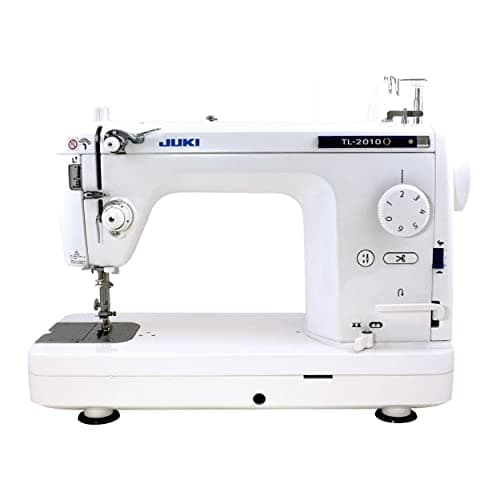
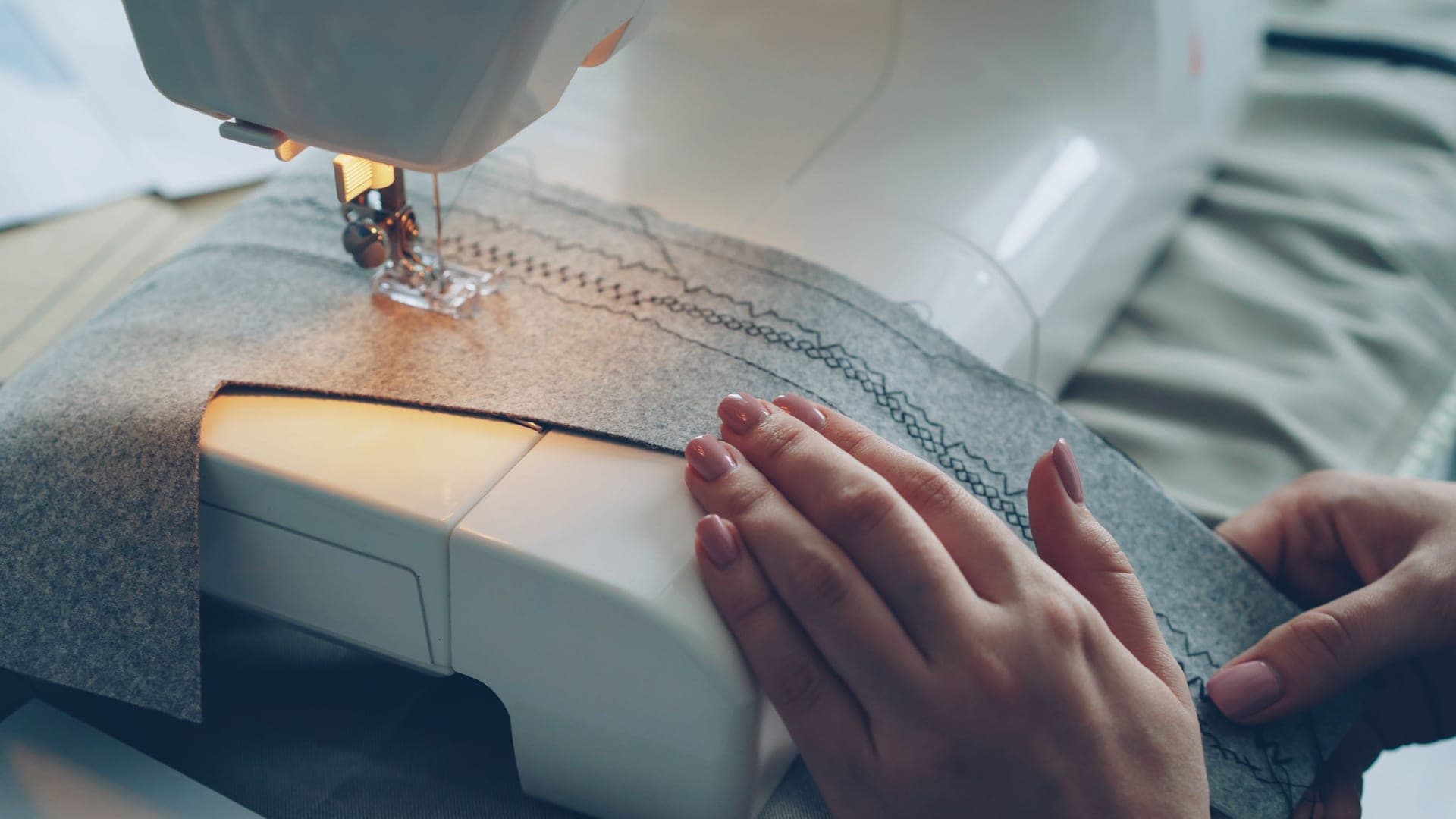
A sewing machine needle stitching through fabric - a stand-in for the Juki TL-2010Q, not a photograph of this model

Juki

9.1 / 10

Semi-professional straight-stitch tier

Juki TL-2010Q

8.5 in wide by 6 in high of arm space, straight stitch only, at 1,500 stitches per minute. Six inches of usable height is the number to notice: it is the most vertical room of any domestic machine in this comparison, and height is what a rolled quilt actually consumes.

Check price on Amazon

#ad We hold no verified live price for this machine, so we show none. How this site is funded.

Published specifications for the Juki TL-2010Q, with the source of each
SpecificationPublished valueWhere it is published
Arm size (throat)215 mm wide x 150 mm high (8.5 in x 6 in)Published as "215(W) x 150(H)mm / 8.5"(W) x 6"(H)"Juki household TL-2010Q specification table
Maximum sewing speed1,500 stitches per minute (minimum 55)Juki household TL-2010Q specification table
Stitch length0 mm to 6 mmJuki household TL-2010Q specification table
Machine dimensions452 mm x 350 mm x 219 mmJuki household TL-2010Q specification table
Weight11.5 kg (25.4 lb)Juki household TL-2010Q specification table
Needle systemHA x 1 (130/705H) / HL x 5, sizes 9 to 18Juki household TL-2010Q specification table

The arithmetic

8.5 x 6 in is 51 sq in of throat opening. A 10 x 4.7 in machine is 47 sq in: wider, but smaller.

Throat width gets quoted and throat height does not, which is how a 10 in machine ends up sounding roomier than an 8.5 in one. 8.5 x 6 = 51 sq in. 10.04 x 4.72 = 47.4 sq in. The Juki has 8% more opening despite being 15% narrower, because a rolled quilt is a cylinder and a cylinder needs height.

What it does well

  • 6 in of usable height, more vertical room than any other domestic machine here
  • 1,500 spm, matched only by the Brother PQ machines
  • Juki publishes the arm size in both mm and inches, and labels which figure is width
  • Aluminum die-cast body at 11.5 kg keeps it stable at full speed

What it does not

  • Straight stitch only: no zigzag, no buttonhole, no decorative stitches
  • 8.5 in of width is narrower than several domestics that are worse machines for quilting

Skip this one if

You need decorative stitches or a buttonhole. This machine does one stitch, in one direction, extremely well, and nothing else at all.

How it scores, by criterion

Room to work9.0
What it upgrades from9.5
Value for the tier9.0
Headroom before the next upgrade8.0
Spec transparency10.0

02 / Best feed control

A sewing machine needle stitching through fabric - a stand-in for the Brother PQ1600S, not a photograph of this model

Brother

8.8 / 10

Semi-professional straight-stitch tier

Brother PQ1600S

The widest domestic throat here at 8.7 in, with a published 11.1 x 23.3 in extension table and 1,500 spm. It trades 0.3 in of height for 0.2 in of width against the Juki, and adds a pin feed system the Juki has no equivalent for.

Check price on Amazon

#ad We hold no verified live price for this machine, so we show none. How this site is funded.

Published specifications for the Brother PQ1600S, with the source of each
SpecificationPublished valueWhere it is published
Needle-to-arm space8.7 in wide x 5.7 in highPublished as "5.7" x 8.7" needle-to-arm space" - Brother lists this one height-first, the reverse of its SE and NQ pagesBrother PQ1600S product page
Extension table11.1 in x 23.3 inBrother PQ1600S product page
Maximum sewing speed1,500 stitches per minuteBrother PQ1600S product page
Feed systemFour color-coded levels of feed dog adjustment, plus a pin feed mechanism that swaps the feed dogs for a single pinBrother PQ1600S product page
Knee lifterIncludedBrother PQ1600S product page

What it does well

  • 8.7 in is the widest domestic throat in this comparison
  • The extension table dimensions are actually published, which is rare
  • Pin feed handles delicate fabric without feed dog marks
  • 1,500 spm with a knee lifter included

What it does not

  • 5.7 in of height against the Juki's 6 in: 3% less opening despite being wider
  • Straight stitch only
  • Brother publishes this figure height-first and its embroidery figures width-first, with no label saying which is which

Skip this one if

You want one machine to do everything. Like the Jukis, this is straight stitch only.

How it scores, by criterion

Room to work8.5
What it upgrades from9.0
Value for the tier9.0
Headroom before the next upgrade8.0
Spec transparency7.0

03 / Best value

A sewing machine needle stitching through fabric - a stand-in for the Juki TL-2000Qi, not a photograph of this model

Juki

8.7 / 10

Semi-professional straight-stitch tier

Juki TL-2000Qi

The same 215 x 150 mm arm and the same 1,500 spm as the TL-2010Q, without the automatic thread trimmer. If budget is the constraint, the sewing is identical.

Check price on Amazon

#ad We hold no verified live price for this machine, so we show none. How this site is funded.

Published specifications for the Juki TL-2000Qi, with the source of each
SpecificationPublished valueWhere it is published
Arm size (throat)215 mm wide x 150 mm high (8.5 in x 6 in)Published as "215(W) x 150(H)mm / 8.5"(W) x 6"(H)"Juki household TL-2000Qi specification table
Maximum sewing speed1,500 stitches per minute (minimum 55)Juki household TL-2000Qi specification table
Auxiliary table590 mm x 335 mm (23 in wide x 13 in deep)Juki household TL-2000Qi specification table
Stitch length0 mm to 6 mmJuki household TL-2000Qi specification table
Weight11.5 kg (25.4 lb)Juki household TL-2000Qi specification table

What it does well

  • Identical 51 sq in throat opening to the TL-2010Q
  • The 23 x 13 in auxiliary table is included, and its dimensions are published
  • Cheapest route to 6 in of usable throat height

What it does not

  • No automatic thread trimmer
  • Straight stitch only

Skip this one if

You free-motion quilt for hours at a time. The thread trimmer on the 2010Q is the difference between finishing a line and reaching for scissors, several hundred times a quilt.

How it scores, by criterion

Room to work9.0
What it upgrades from9.0
Value for the tier9.5
Headroom before the next upgrade8.0
Spec transparency10.0

04 / Best all-purpose option

Fabric feeding under the needle of a domestic sewing machine - a stand-in for the Janome Memory Craft 6700 Professional, not a photograph of this model

Janome

8.5 / 10

Upper domestic tier

Janome Memory Craft 6700 Professional

10 inches to the right of the needle and 200 built-in stitches: the widest machine here that still does everything a domestic machine does. The catch is 120 mm of height, the lowest opening in this comparison.

Check price on Amazon

#ad We hold no verified live price for this machine, so we show none. How this site is funded.

Published specifications for the Janome Memory Craft 6700 Professional, with the source of each
SpecificationPublished valueWhere it is published
Work space255 mm x 120 mm (10.04 in wide x 4.72 in high)Published as "255 x 120 (mm)"; the same page also states "10 inches (255mm) to the right of the needle"Janome Global MC6700 Professional product page
Maximum sewing speed1,200 stitches per minuteJanome Global MC6700 Professional product page
Built-in stitches200Janome Global MC6700 Professional product page
Machine dimensions516 mm x 300 mm x 220 mmJanome Global MC6700 Professional product page
Weight11 kg (24.3 lb)Janome Global MC6700 Professional product page

What it does well

  • 10.04 in of width, the widest domestic here
  • 200 stitches, so it is a real general-purpose machine as well as a quilting one
  • Janome publishes the workspace as an explicit width by height pair in millimeters

What it does not

  • 120 mm (4.72 in) of height is the lowest opening in this comparison
  • 1,200 spm against 1,500 on the straight-stitch machines

Skip this one if

Your bottleneck is a king-size quilt rolled under the arm. Extra width does not help if the roll will not clear 4.7 in of height.

How it scores, by criterion

Room to work8.0
What it upgrades from9.0
Value for the tier8.0
Headroom before the next upgrade7.5
Spec transparency9.5

How this was ranked

Machines we claim to have tested: none. Everyone in this category says they tested twenty. We have not tested any, and we say so. What we did instead: built the candidate set from what Amazon actually stocks, read the published specification off each manufacturer’s own page, normalized every measurement into the same units and the same order, did the arithmetic on what each step up buys, and left every figure the maker does not publish visibly blank rather than filling it in. Every number on this page links to where it was published, so you can check the work in about five minutes.

Sponsored placements
0
Free machines accepted
0
Specs linked to a maker page
All

The full method, including what we refuse to claim

Questions people actually ask

Frequently asked

What makes a machine good for free motion quilting?

Three things: feed dogs that genuinely drop, a high maximum speed (because stitch length is a ratio of machine speed to hand speed), and enough throat opening that the quilt moves freely in every direction. The Juki TL-2010Q leads on all three among the machines here.

Does machine speed matter for free motion quilting?

Yes, and not mainly for time. At the same hand speed, 1,500 stitches per minute gives you 25% more stitches per inch than 1,200, which means shorter stitches that follow a curve more closely. It is a stitch-quality specification.

Do I need a stitch regulator for free motion?

No, but it helps a lot with consistency. Without one, evenness comes from keeping your hand speed steady relative to the machine. On domestic machines a regulator is generally an accessory rather than built in.

What is the best sewing machine needle for free motion quilting?

That depends on thread and batting rather than on the machine, so we are not going to give you a size we cannot source. The one machine-specific note worth having: Juki publishes the TL-2010Q needle system as HA x 1 (130/705H) or HL x 5 in sizes 9 to 18, so check compatibility before buying in bulk.

Can you free motion quilt on any sewing machine?

On most, if the feed dogs drop or can be covered and a darning foot is available. Whether it is pleasant is a different question and depends mostly on throat opening. We work through that on the domestic machine page.

Sources

Every specification on this page was read from one of these pages on 1 September 2026.

Read next