Machine review
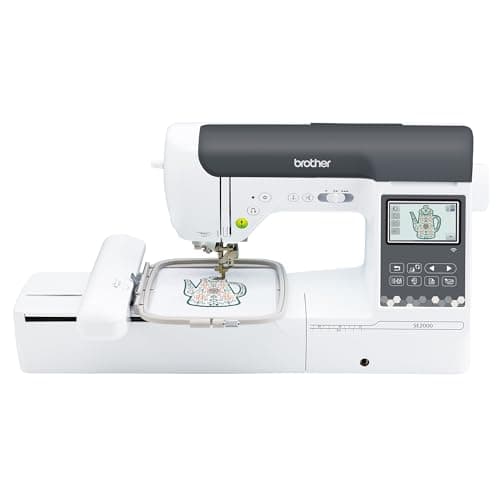
Brother SE2000 review
The combination machine to buy if you are upgrading rather than starting. Most of what makes it worth the money is not the field - it is that Brother tells you what it does.
Heads up: the buy links on this page are affiliate links. If you buy through one we earn a commission at no extra cost to you. It does not change what we recommend or the order we rank things in - here is how we keep those separate.
The short answer
The best-documented machine in Brother's single-needle range, and the right upgrade out of 4 x 4 in.
Brother publishes a 5 x 7 in maximum embroidery area, 650 stitches per minute embroidery, 850 stitches per minute sewing, 7.4 in from needle to arm, 193 built-in designs, 241 sewing stitches and a 3.7 in color LCD touchscreen.
That list is unremarkable until you compare it with the rest of the range. Brother publishes no speed figure at all for the SE600, SE700, SE1900, PE800, NQ3550W or the Luminaire XP3. On this machine it publishes both.
What the SE2000 is
A combination machine: an embroidery unit clips onto the free arm and moves a hoop under a stationary needle, and with the unit removed it is a full domestic sewing machine with 241 built-in stitches and a one-step buttonhole.
It is single-needle, like every combination machine, so a six-color design is five manual thread changes. It sits in the middle of the Brother lineup: two tiers above the SE700, one tier below the 6 x 10 in NQ machines.
What 5 x 7 inches covers
Thirty-five square inches. Concretely:
- A full left-chest logo with margin to spare - comfortably
- A large monogram on a towel or a robe - yes
- A quilt label with a date, a name and a line of text - yes
- A towel border across the width of a hand towel - yes
- A name across the back of a jacket - no, that wants a 10 in long axis
- A full-back design - no
Leave about a quarter inch of margin inside the stated size. The concrete list by hoop size is on what fits in each hoop.
Why this is the upgrade worth making
SE700 field: 4 x 4 = 16 sq in.
SE2000 field: 5 x 7 = 35 sq in.
35 / 16 = 2.19, so this is 119% more design area. That is the largest single step anywhere in the Brother range - larger than 5 x 7 in to 6 x 10 in (+71%) and larger than 6 x 10 in to 12 x 8 in (+60%).
What you get back is not stitching time. It is the re-hooping and the eyeballed re-alignment that a split design forces, which is also where split designs go wrong.
The three things worth paying for here
Published speeds
650 spm embroidery and 850 spm sewing. Modest numbers - a PR680W runs at 1,000 - but they exist, which means you can actually estimate how long a design will take. On the SE1900 sitting right beside it in Brother’s own range, you cannot, because Brother never says.
Wireless design transfer
Designs move from a computer to the machine over the network rather than on a USB stick. This is the single change people notice most day to day, because the USB step is the one that breaks the workflow.
Magnetic hoop support
Brother lists the SE2000 as compatible with the 4 x 7 in SAMF180N magnetic frame, which holds material up to 2 mm thick with six magnets instead of a screw-tightened ring. That is the real fix for hoop burn on toweling, fleece and knits, and the compatibility list is published rather than guessed - the magnetic hoop page covers what it changes.
What 650 stitches per minute means in practice
Because Brother publishes the figure, this is one of the few machines on the site where you can work out how long a job takes before you start it. The arithmetic is worth doing once.
A 20,000-stitch design, timed
20,000 stitches at 650 spm = about 31 minutes of stitching.
The same design on a machine publishing 850 spm - Brother’s own NQ1600E - is about 24 minutes. On a 1,000 spm multi-needle machine it is 20 minutes.
Those are stitching times only. They exclude thread changes, and on a single-needle machine thread changes are where the real time goes: a six-color design is five manual re-threads at roughly two minutes each, which adds ten minutes of standing at the machine to any of those figures.
So the honest framing is that the SE2000 is not slow for a home machine, and the speed is not what limits it. The single needle is. If you routinely stitch multi-color designs in batches, the number to fix is the needle count rather than the stitches per minute - which is the argument on single needle vs multi needle.
Where it falls short
650 spm is slow. Against a multi-needle machine at 1,000 spm, a long design takes noticeably longer, and unlike a multi-needle machine you have to be there for every color change.
7.4 in of needle-to-arm space is a domestic figure. It is published as a single width with no height, so it cannot be compared properly against machines that publish a width-and-height pair. It does not make this a quilting machine - a straight-stitch quilting machine publishes 8.5 x 6.0 in.
The field is 42% short of the next tier. If you already know you want a name across a back, 6 x 10 in is the tier and buying here means buying twice.
SE2000 or SE1900?
Same 5 x 7 in field, same 138-to-193 range of built-in designs, and effectively the same stitch library at 240 against 241. The SE2000 adds wireless, the 3.7 in color touchscreen, and both published speed figures. If the SE1900 is deeply discounted it is the value buy; inside about 15% of the price, take the SE2000. The full comparison is on the SE2000 against the SE1900.
Who should buy it, and who should not
Buy it if you are replacing a 4 x 4 in machine, if this has to be your only machine, or if you want a combination machine whose maker publishes what it does.
Do not buy it if you already own a sewing machine you like - an embroidery-only PE900 gives you the same 5 x 7 in field and the same 650 spm without a second sewing head to pay for. And do not buy it if your designs need a 10 in long axis; that is the NQ tier, ranked on the large-designs roundup.
The picks
The SE2000, its predecessor, and the machine above it
Brother
Brother SE2000
Upper combo tier
The combo machine to buy if you are upgrading rather than starting: 5 x 7 in of field, 241 sewing stitches, a 3.7 in color screen, wireless design transfer, and published speed figures, which most of Brother's range does not have.
Skip it if: You are going to want 6 x 10 in within a year. Buy the field you will need, not the field you need today.
#ad Price as of October 21, 2026, from Amazon. Prices change. How this site is funded.
Brother
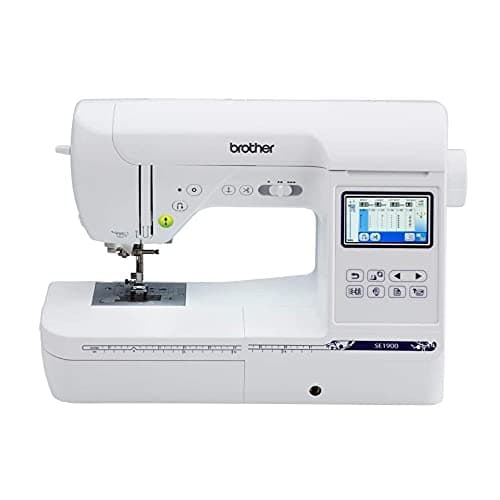
Brother SE1900
Upper combo tier
The SE2000's predecessor: same 5 x 7 in field, 240 sewing stitches, a smaller screen and no wireless. Worth buying on price alone, and Brother publishes neither a speed figure nor a work area for it.
Skip it if: The SE2000 is within about 15% of the price. Wireless transfer and the larger screen are the difference between a pleasant workflow and a USB stick.
#ad Price as of October 21, 2026, from Amazon. Prices change. How this site is funded.
Brother
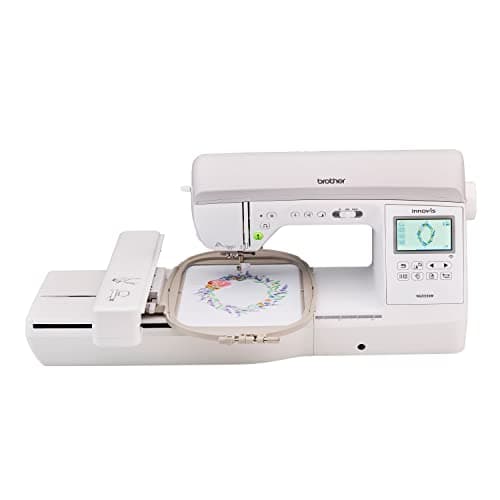
Brother NQ3550W
Premium combo tier
The largest embroidery field on a machine that still sews: 6 x 10 in, with 8.3 in of usable width beside the needle. This is the point at which one machine genuinely covers both jobs.
Skip it if: You embroider for money. At this price the four-needle machines start, and a four-needle machine changes colors without you.
#ad Price as of October 21, 2026, from Amazon. Prices change. How this site is funded.
How this was ranked
Machines we claim to have tested: none. Everyone in this category says they tested twenty. We have not tested any, and we say so. What we did instead: built the candidate set from what Amazon actually stocks, read the published specification off each manufacturer’s own page, normalized every measurement into the same units and the same order, did the arithmetic on what each step up buys, and left every figure the maker does not publish visibly blank rather than filling it in. Every number on this page links to where it was published, so you can check the work in about five minutes.
- Sponsored placements
- 0
- Free machines accepted
- 0
- Specs linked to a maker page
- All
Questions people actually ask
Frequently asked
What is the embroidery area on the Brother SE2000?
5 x 7 in, per Brother’s product page - 35 square inches. That is a hardware limit set by carriage travel, so no larger hoop extends it.
How fast is the Brother SE2000?
Brother publishes 650 stitches per minute for embroidery and 850 for sewing. That makes it one of the few machines in Brother’s single-needle range with any published speed at all - the SE600, SE700, SE1900, PE800 and NQ3550W have none.
Does the Brother SE2000 sew as well as embroider?
Yes. Brother publishes 241 built-in sewing stitches and 850 spm sewing speed, with 7.4 in from needle to arm. Remove the embroidery unit and it is a complete domestic sewing machine.
Is the Brother SE2000 worth it over the SE1900?
Usually. The field is identical at 5 x 7 in, but the SE2000 adds wireless design transfer, a 3.7 in color touchscreen against a 3 x 1.6 in display, and published speed figures where the SE1900 has none. If the SE1900 is heavily discounted, the stitched result is the same.
Can the Brother SE2000 use a magnetic hoop?
Yes. Brother lists the SE2000 among the machines compatible with the 4 x 7 in SAMF180N magnetic frame, which takes material up to 2 mm thick. You lose an inch of width against the full 5 x 7 in field in exchange for no hoop burn.
Is the Brother SE2000 good for quilting?
For piecing, yes. For quilting a full-size quilt, no. Brother publishes 7.4 in from needle to arm with no height figure at all; a machine built for quilting publishes 8.5 x 6.0 in of opening. It is an embroidery machine that also sews.
Sources
Every specification on this page was read from one of these pages on 1 September 2026.
Read next