Skip to content

Roundup

The best embroidery machines for hats

Almost every machine sold as suitable for hats cannot do hats. The capability is published, it is rare, and it is the whole page.

By Scooter M., enthusiastPublished September 1, 2026How we pick

Heads up: the buy links on this page are affiliate links. If you buy through one we earn a commission at no extra cost to you. It does not change what we recommend or the order we rank things in - here is how we keep those separate.

The shortlist

Ranked, with the numbers

Ranked on published manufacturer specifications, normalized to the same units, with the arithmetic on what each step up actually buys. Tap any row for the full write-up, including who should skip it.

#MachineBest forScorePrice
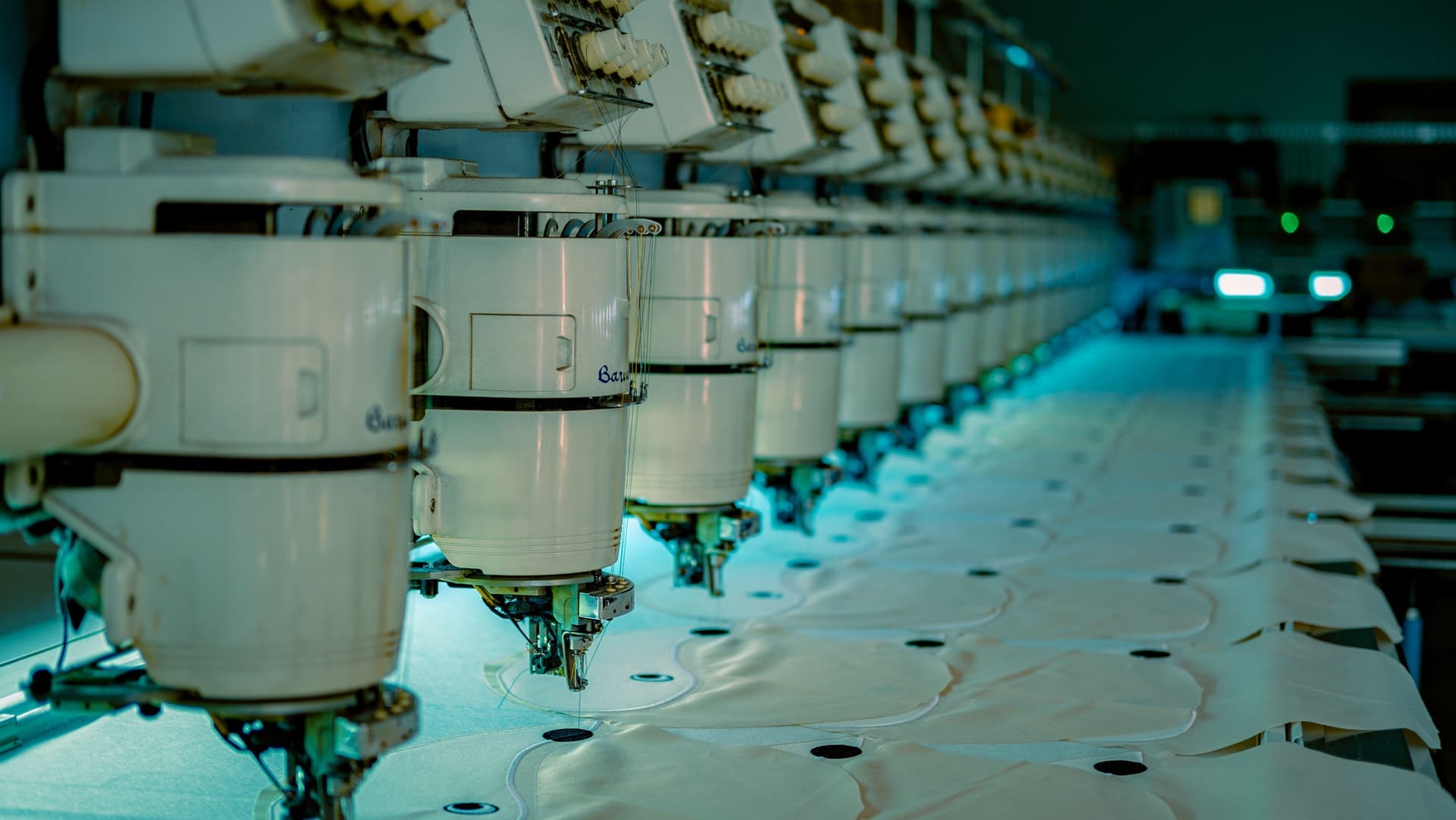
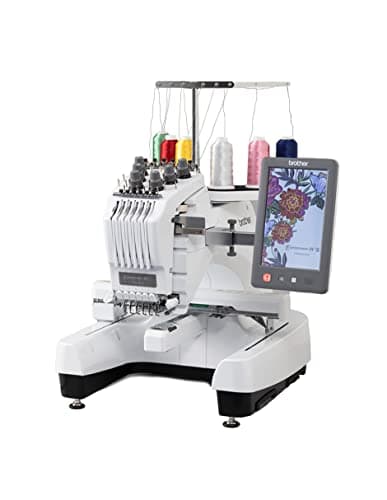
01A row of industrial sewing machines in a textile workshop - a stand-in for the Brother Entrepreneur PR680W, not a photograph of this modelBrother Entrepreneur PR680WSmall-business embroidery, especially caps and multi-color logosBest for hats9.3Check price on Amazon
02A row of industrial sewing machines in a textile workshop - a stand-in for the Brother PR1055X, not a photograph of this modelBrother PR1055XShops running ten-color designs back to backBest for high-volume caps8.6Check price on Amazon
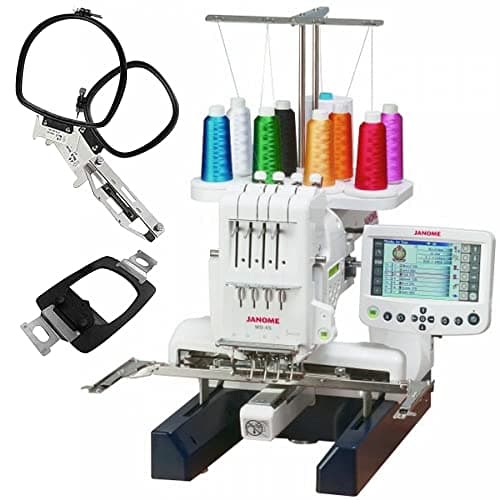
03A row of industrial sewing machines in a textile workshop - a stand-in for the Janome MB-4S, not a photograph of this modelJanome MB-4SHome-based embroidery businesses short on bench spaceBest compact alternative8.7Check price on Amazon

Scores are ours and editorial. They are never published as review or rating markup, because we have not tested these machines - here is what we did instead.

The short answer

The Brother PR680W. It is one of only two machines on this site that publishes cap frame capability.

A cap front is curved and structured. It does not lie flat, so it cannot be held in a standard flat hoop - it needs a cylindrical cap frame that wraps the cap around a drum, and a machine whose carriage can drive one.

Brother publishes cap frame capability on the PR680W and on the PR1055X. That is the list. Everything else on this site is a flat-goods machine.

Why most machines cannot do this

It is a geometry problem, not a software one. A flat hoop clamps fabric between two rings and presents it as a plane. A cap has a crown that curves in two directions and a seam running up the middle, and it is often buckram-stiffened so it holds its shape whether you want it to or not.

A cap frame solves this by wrapping the cap around a curved drum and rotating the drum under the needle as the design stitches. The machine has to be designed for that motion. Retrofitting it to a flat domestic machine is not a thing you can buy.

What you will find sold as “hat hoops” for domestic machines are flat attachments that hold a partially deconstructed cap flat-ish. They exist, they work for very small designs on unstructured caps, and they are not what a shop taking cap orders should be planning around.

What cap capability buys you commercially

Caps are the highest-margin item in small-shop embroidery, because the blank is cheap, the design is small, and the perceived value is high. A team order of caps is also the single most common request a small embroidery shop turns down for want of the right machine.

A cap design is typically small - the front panel of a structured cap gives you a working area a fraction of the machine’s full field. So the field size that dominates every other page on this site matters less here. What matters is: can the machine hold the cap at all, and how many colors can it run before it stops.

Why color count matters more on caps than on shirts

A cap design is small - call it 6,000 stitches. At 1,000 spm that is six minutes of stitching.

Now add color changes. On a single-needle machine, a four-color cap design is three thread changes at roughly two minutes each: six minutes of stitching and six minutes of re-threading, so half the job is you standing at the machine. On a six-needle machine it is six minutes, unattended.

The shorter the design, the worse the ratio gets. That is why caps push you toward needles harder than shirts do.

Skip this

Skip any machine sold as hat-capable that does not publish cap frame capability

This is the clearest example on the whole site of a specification that is either published or is not. Brother publishes it. If a listing says a machine does hats and the manufacturer’s own page does not list cap frame capability, the listing is describing a workaround, not a capability.

The Janome MB-4S is on this page as the compact four-needle alternative for the flat-goods side of a cap business. Janome’s global specification page for it, which we read on 1 September 2026, does not list cap frame capability, so we are not claiming it has any.

Budget for the frame, not just the machine

The cap frame is a separate purchase on every machine here. So is the driver assembly on some configurations. If you are pricing a move into caps, price the machine, the frame, and a stock of cap-specific backing - the last one is cheap and the first job goes badly without it.

If caps are a maybe rather than a plan, buy for flat goods now and read the small-business roundup instead. Buying cap capability you never use is the most expensive way to keep an option open in this category.

The write-ups

Every pick, in full

01 / Best for hats

A row of industrial sewing machines in a textile workshop - a stand-in for the Brother Entrepreneur PR680W, not a photograph of this model

Brother

9.3 / 10

Multi-needle tier

Brother Entrepreneur PR680W

Six needles, a 12 x 8 in field, 1,000 stitches per minute and cap frame capability. This is the machine that turns embroidery from a hobby into something that can invoice, and it is genuinely on Amazon rather than dealer-gated.

Check price on Amazon

#ad We hold no verified live price for this machine, so we show none. How this site is funded.

Published specifications for the Brother Entrepreneur PR680W, with the source of each
SpecificationPublished valueWhere it is published
Needles6Published as "6-Needle" embroidery systemBrother PR680W product page
Maximum embroidery area12 in x 8 inPublished as "12" x 8"" in the specifications; the description states "8" x 12""Brother PR680W product page
Maximum embroidery speedUp to 1,000 stitches per minuteBrother PR680W product page
Cap embroideryCap frame capabilityBrother PR680W product page
Display10.1 in high-definition displayBrother PR680W product page
Built-in designs100 designs, 18 monogramming fonts, 50 lettering fontsBrother PR680W product page
WirelessWireless enabled, with Design Database TransferBrother PR680W product page

The arithmetic

Six needles do not make it six times faster. They remove the re-thread, which on a six-color design is where the time actually goes.

A six-color left-chest logo on a single-needle machine is five thread changes. Call each one two minutes of unthreading, re-threading and re-tensioning: that is 10 minutes of hands-on time per garment, and you have to be standing there for all of it. On the PR680W the same design runs start to finish without you. At 1,000 spm against 650 spm the stitching itself is also about 35% quicker, but the stitching was never the bottleneck.

What it does well

  • 96 sq in of field: six times a 4 x 4 in machine and 60% more than 6 x 10 in
  • 1,000 spm against 650 spm on Brother's own upper single-needle machines
  • Six needles means a six-color design runs unattended
  • Cap frame capability, which no single-needle machine here has
  • 10.1 in screen makes on-machine editing genuinely usable

What it does not

  • It does not sew, so budget for a separate sewing machine
  • Footprint and weight are commercial, not domestic
  • The cap frame is a separate purchase

Skip this one if

Everything you stitch is one color on flat goods. Six needles buy you color changes you never make, and a single-needle 6 x 10 in machine costs a fraction of this.

How it scores, by criterion

Room to work9.5
What it upgrades from10.0
Value for the tier8.5
Headroom before the next upgrade9.0
Spec transparency9.5

02 / Best for high-volume caps

A row of industrial sewing machines in a textile workshop - a stand-in for the Brother PR1055X, not a photograph of this model

Brother

8.6 / 10

Top of the multi-needle tier

Brother PR1055X

Ten needles, a 14 x 8 in field and 1,000 spm. The ceiling of the range, and past the point where most one-person shops see a return on the extra four needles.

Check price on Amazon

#ad We hold no verified live price for this machine, so we show none. How this site is funded.

Published specifications for the Brother PR1055X, with the source of each
SpecificationPublished valueWhere it is published
Needles10Brother PR1055X product page
Maximum embroidery area14 in x 8 inPublished as "14" x 8""Brother PR1055X product page
Maximum embroidery speed1,000 stitches per minuteBrother PR1055X product page
Cap embroideryYesBrother PR1055X product page

What it does well

  • 112 sq in of field, the largest here
  • Ten needles covers almost any commercial design without a thread change
  • Same 1,000 spm as the PR680W

What it does not

  • Same speed as the six-needle machine: you are buying colors, not throughput
  • Substantially more machine than a one-person shop needs

Skip this one if

You are a one-person operation. The PR680W runs the same speed with the same cap capability, and four extra needles only pay for themselves if your designs actually use them.

How it scores, by criterion

Room to work10.0
What it upgrades from9.0
Value for the tier6.5
Headroom before the next upgrade10.0
Spec transparency8.0

03 / Best compact alternative

A row of industrial sewing machines in a textile workshop - a stand-in for the Janome MB-4S, not a photograph of this model

Janome

8.7 / 10

Multi-needle tier

Janome MB-4S

Four needles and a 240 x 200 mm field in a machine that is physically smaller and lighter than the six-needle alternatives. The four-color ceiling is the whole decision.

Check price on Amazon

#ad We hold no verified live price for this machine, so we show none. How this site is funded.

Published specifications for the Janome MB-4S, with the source of each
SpecificationPublished valueWhere it is published
Needles4 (single head)Janome Global MB-4S product page
Maximum embroidery size240 mm x 200 mm (9.45 in x 7.87 in)Published as "240 x 200" mmJanome Global MB-4S product page
Maximum embroidery speed800 stitches per minutePublished as "Maximum embroiderying speed: 800 spm"Janome Global MB-4S product page
Built-in designs50 designs, 10 English monogramming fontsJanome Global MB-4S product page
Machine dimensions365 mm x 660 mm x 520 mmJanome Global MB-4S product page
Weight22.6 kg (49.8 lb)Janome Global MB-4S product page

What it does well

  • 74.4 sq in of field, more than a 6 x 10 in single-needle machine
  • 22.6 kg is genuinely liftable, which the six-needle machines are not
  • Janome publishes the field in millimeters, unambiguously, with no width-height confusion

What it does not

  • Four needles, not six: a five-color design still interrupts you
  • 800 spm against the PR680W's 1,000
  • 50 built-in designs is a small library

Skip this one if

Your typical design has more than four colors. On a four-needle machine a five-color design still stops and waits for you, which removes most of the reason to buy one.

How it scores, by criterion

Room to work8.5
What it upgrades from9.5
Value for the tier8.5
Headroom before the next upgrade7.0
Spec transparency9.5

How this was ranked

Machines we claim to have tested: none. Everyone in this category says they tested twenty. We have not tested any, and we say so. What we did instead: built the candidate set from what Amazon actually stocks, read the published specification off each manufacturer’s own page, normalized every measurement into the same units and the same order, did the arithmetic on what each step up buys, and left every figure the maker does not publish visibly blank rather than filling it in. Every number on this page links to where it was published, so you can check the work in about five minutes.

Sponsored placements
0
Free machines accepted
0
Specs linked to a maker page
All

The full method, including what we refuse to claim

Questions people actually ask

Frequently asked

Can you embroider hats on a regular embroidery machine?

Not properly. A structured cap front curves in two directions and will not sit flat in a standard hoop. Machines that can do caps use a cylindrical cap frame, and the manufacturer publishes that capability. On this site only the Brother PR680W and PR1055X do.

What is the best embroidery machine for hats and shirts together?

The Brother PR680W. It publishes cap frame capability and a 12 x 8 in flat field, so the same machine covers structured caps and full-back shirt work without a second purchase.

Do I need a special hoop for hats?

You need a cap frame, which is a different thing from a hoop: it wraps the cap around a curved drum rather than clamping fabric flat between two rings. It is a separate purchase from the machine on every model here.

How many colors can a cap design have?

As many as you like, but each color beyond your needle count is a manual thread change. Cap designs are short - often around 6,000 stitches - so thread changes are a larger share of the job than they are on a shirt. Six needles covers most cap work without stopping.

Is a four-needle machine enough for caps?

Only if it publishes cap frame capability, and the Janome MB-4S specification page we read does not. Needle count and cap capability are separate specifications - a machine can have four needles and still be a flat-goods machine.

Sources

Every specification on this page was read from one of these pages on 1 September 2026.

Read next