Skip to content

Roundup

The best embroidery machines for shirts and hoodies

The hard part of shirt embroidery is not the machine. It is that knit stretches under the needle and hoodie fleece keeps the ring mark. Both have specification-level answers.

By Scooter M., enthusiastPublished September 13, 2026How we pick

Heads up: the buy links on this page are affiliate links. If you buy through one we earn a commission at no extra cost to you. It does not change what we recommend or the order we rank things in - here is how we keep those separate.

The shortlist

Ranked, with the numbers

Ranked on published manufacturer specifications, normalized to the same units, with the arithmetic on what each step up actually buys. Tap any row for the full write-up, including who should skip it.

#MachineBest forScorePrice
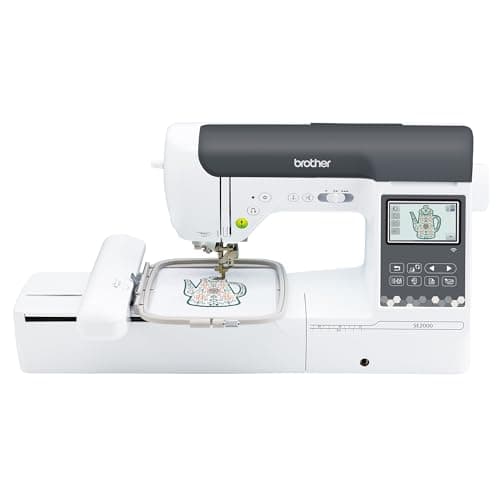
01Brother SE2000Brother SE2000The upgrade out of a 4 x 4 in combo machineBest for shirts overall8.6$1,499.99 - View on Amazon
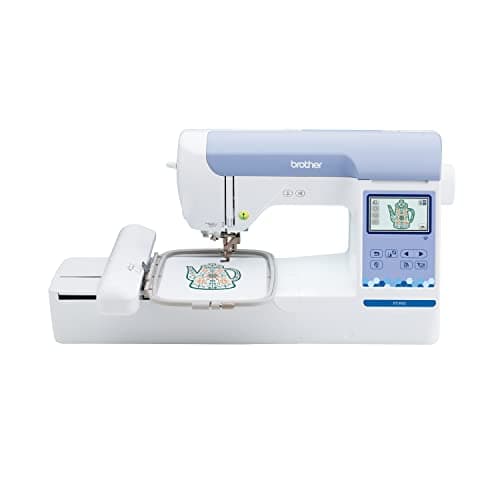
02Brother PE900Brother PE900A 5 x 7 in embroidery-only machine you will use every weekBest if you already sew8.4$1,179.99 - View on Amazon
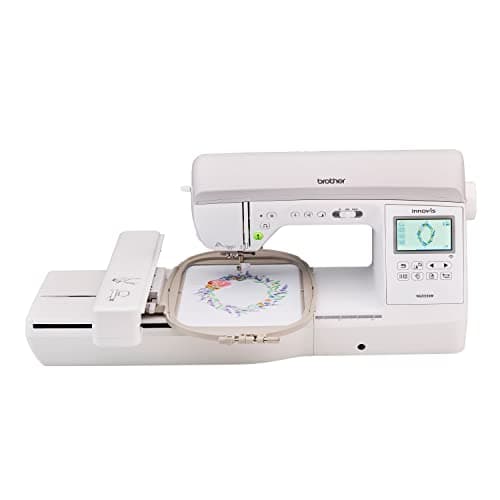
03Brother NQ3550WBrother NQ3550WOne machine that has to do both quilting and embroidery wellBest for full-back designs8.8$2,999.99 - View on Amazon
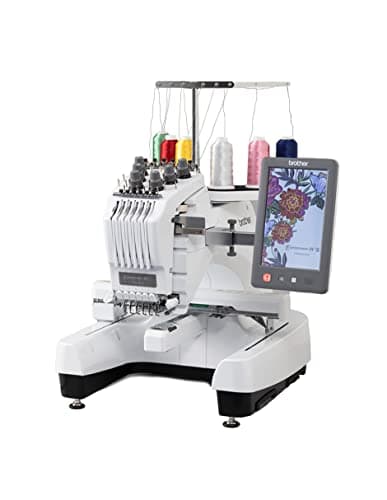
04Brother Entrepreneur PR680WBrother Entrepreneur PR680WSmall-business embroidery, especially caps and multi-color logosBest for selling shirts9.3$12,999.99 - View on Amazon

Scores are ours and editorial. They are never published as review or rating markup, because we have not tested these machines - here is what we did instead.

The short answer

The Brother SE2000, because 5 x 7 in covers the two placements people actually order.

A left-chest logo lives inside about 4 inches. A full-front design wants 5 to 7. Both fit the 5 x 7 in field Brother publishes for the SE2000, along with 650 spm embroidery, 850 spm sewing and 241 sewing stitches.

It is also on Brother’s compatibility list for the 4 x 7 in magnetic frame - which is the specification that decides whether your hoodies come back with a ring pressed into the fleece.

How we judged this

Shirt work is decided by placement and by fabric behavior, in that order. Three criteria.

1. Field size, matched to the placement you actually sell

There are really only three placements, and each has a field requirement:

  • Left chest. Industry-standard sizing puts this at roughly 3.5 to 4 inches wide. A 4 x 4 in field does it, though with no margin for error.
  • Full front. Typically 6 to 10 inches wide. A 5 x 7 in field handles the smaller end; anything wider needs the 6 x 10 in tier.
  • Full back or a name across the shoulders. Needs a 10 in long axis. That is the 6 x 10 in tier and nothing below it.

The concrete list by hoop size is on what fits in each hoop.

2. Whether the maker lists a magnetic frame

This is the criterion nobody puts in a shirt roundup and it is the one that ruins orders. A screw-tightened hoop clamps hard enough to leave a visible ring in hoodie fleece and in the pile of a heavyweight tee. It often relaxes out; on a customer order, “often” is not good enough.

Brother publishes an explicit compatibility list for its 4 x 7 in SAMF180N magnetic frame: PE800, PE900, SE1900, SE2000, NS1250E and NS2850D. If the machine you are considering is not on a published list, the fix does not exist for it.

3. Needle count, which only matters once you are selling

A one or two-color left-chest logo barely notices the single needle. A six-color design across twenty shirts is a different job entirely, and that is where the multi-needle tier stops being a luxury.

The machines, on published numbers

Shirt-relevant specifications from each maker's product page
MachineFieldNeedlesSpeedMagnetic frame listedSews?
Brother SE20005 x 7 in1650 spmYesYes, 241 stitches
Brother PE9005 x 7 in1650 spmYesNo
Brother NQ3550W6 x 10 in1Not publishedNot on Brother's listYes, 291 stitches
Brother PR680W12 x 8 in6Up to 1,000 spmNot applicableNo

The fabric problem, and what actually solves it

Knit stretches. That is the entire difficulty of shirt embroidery, and it is worth being clear that no machine on this page solves it - the solution is backing and needles, both of which cost a few dollars.

Why a knit shirt puckers and a woven one does not

A woven shirt holds its shape because the threads are locked at right angles. A jersey knit is a grid of loops, so it stretches in every direction and springs back at a different tension than it went in at.

Stitch a dense design into an unsupported knit and the fabric is pulled tight under the design and loose around it. That is the pucker.

The fix is cutaway stabilizer, which stays in the garment permanently and holds the knit at the tension it was hooped at - not tear-away, which is removed and takes the support with it. Add a ballpoint needle so the point pushes between loops instead of cutting them.

Why each machine placed where it did

1. Brother SE2000 - covers both common placements and takes the magnetic frame

5 x 7 in handles left chest and most full fronts. Both speeds published. Wireless design transfer. On the magnetic frame list. And because it sews, you can finish or alter the garment on the same machine.

The honest drawback: 35 square inches will not take a design across a back, so any order asking for one gets declined or split. 650 spm is slow if shirt work becomes volume work.

2. Brother PE900 - the same field without paying for a sewing head

Brother publishes the same 5 x 7 in field, the same 650 spm, 7.4 in from needle to arm, 193 designs and wireless transfer. It is also on the magnetic frame list. If you already own a sewing machine you like, this is the better buy of the two.

The honest drawback: it does not sew at all. It is a second machine on your table, and if shirts are the only thing you make that may be a poor use of space.

3. Brother NQ3550W - the one that takes a full back

6 x 10 in - 60 square inches, 71% more than 5 x 7 in - and almost all of the gain is on the long axis, which is exactly what a back design or a name across the shoulders needs. 291 sewing stitches and 8.3 in of usable width beside the needle.

The honest drawback: Brother publishes no embroidery speed for it at all, so you cannot plan a run. It is not on Brother’s magnetic frame compatibility list, so the hoop-mark fix that the two machines above can use is not available here. And it is a considerably larger purchase.

4. Brother PR680W - the one to buy when shirts become orders

Six needles, a published 12 x 8 in field and 1,000 stitches per minute. A six-color design across twenty shirts runs without you standing at the machine, which is the only thing that makes volume shirt work viable.

The honest drawback: it does not sew, the footprint is commercial, and it is a serious purchase that only makes sense once repeat multi-color orders are real rather than hoped for. The payback arithmetic is on the small business roundup.

Skip this

Skip the 6 x 10 in tier if you only sell left-chest logos

A left-chest design is about 4 inches wide. Buying 60 square inches of field to stitch 12 is paying for headroom you will never reach, and the money is better spent on cutaway backing, a magnetic frame and a second hoop.

Step up only when a customer has actually asked for something across a back. Until then, 5 x 7 in with a magnetic frame is the stronger setup - and the budget roundup covers what the tier below gives up.

Choosing in three questions

What placement do people actually ask you for? Left chest only: 5 x 7 in is generous. Full back or shoulder names: 6 x 10 in, no way around it.

Do you embroider hoodies or heavyweight fleece? If yes, buy a machine that appears on a published magnetic frame compatibility list. That is the SE2000 or the PE900 here.

Is the same multi-color design repeating across an order? If yes, needles are the constraint and field size is not - single needle vs multi needle shows where that line sits.
The write-ups

Every pick, in full

01 / Best for shirts overall

Brother SE2000

Brother

8.6 / 10

Upper combo tier

Brother SE2000

The combo machine to buy if you are upgrading rather than starting: 5 x 7 in of field, 241 sewing stitches, a 3.7 in color screen, wireless design transfer, and published speed figures, which most of Brother's range does not have.

$1,499.99 - View on Amazon

#ad Price as of September 13, 2026, from Amazon. Prices change. How this site is funded.

Published specifications for the Brother SE2000, with the source of each
SpecificationPublished valueWhere it is published
Maximum embroidery area5 in x 7 inPublished as "5" x 7""Brother SE2000 product page
Needle to arm7.4 inPublished as "7.4" from needle to arm"Brother SE2000 product page
Maximum embroidery speed650 stitches per minuteBrother SE2000 product page
Maximum sewing speed850 stitches per minuteBrother SE2000 product page
Built-in embroidery designs193Brother SE2000 product page
Built-in sewing stitches241Brother SE2000 product page
Magnetic hoop supportTakes the Brother 4 in x 7 in magnetic hoopBrother SE2000 product page
Display3.7 in color LCD touchscreenBrother SE2000 product page

The arithmetic

5 x 7 in is 35 sq in of design area. 4 x 4 in is 16. The upgrade more than doubles what you can stitch in one hooping.

35 / 16 = 2.19. Everything that previously needed splitting across two hoopings - a full back design, a large name drop, most jacket work - becomes a single hooping. The time saved is not the stitching. It is the re-hooping and the alignment.

What it does well

  • 119% more design area than any 4 x 4 in machine
  • Brother publishes both speed figures, which the SE600 and SE700 pages do not
  • Wireless design transfer removes the USB stick from the workflow
  • Officially supports the 4 x 7 in magnetic hoop, which is the real fix for hoop burn

What it does not

  • 650 spm embroidery is slow next to a multi-needle machine's 1,000
  • 7.4 in needle-to-arm is a domestic figure; it does not make this a quilting machine

Skip this one if

You are going to want 6 x 10 in within a year. Buy the field you will need, not the field you need today.

How it scores, by criterion

Room to work7.5
What it upgrades from9.5
Value for the tier8.5
Headroom before the next upgrade7.0
Spec transparency9.5

02 / Best if you already sew

Brother PE900

Brother

8.4 / 10

Upper embroidery-only tier

Brother PE900

The PE800 with the numbers filled in: the same 5 x 7 in field, but Brother publishes 650 spm, 7.4 in from needle to arm, a 3.7 in screen and wireless transfer. What you pay extra for is the workflow, not the field.

$1,179.99 - View on Amazon

#ad Price as of September 13, 2026, from Amazon. Prices change. How this site is funded.

Published specifications for the Brother PE900, with the source of each
SpecificationPublished valueWhere it is published
Maximum embroidery area5 in x 7 inPublished as "5" x 7"" embroidery areaBrother PE900 product page
Needle to arm7.4 inPublished as "7.4" from needle to arm"Brother PE900 product page
Maximum embroidery speed650 stitches per minuteBrother PE900 product page
Built-in embroidery designs193Brother PE900 product page
Display3.7 in LCDBrother PE900 product page
WirelessWireless LAN enabled - designs transfer from a PC without USBBrother PE900 product page

What it does well

  • Brother publishes the speed, the reach and the screen size, which is unusual in this range
  • Wireless transfer, so no USB stick in the loop
  • 193 built-in designs against the PE800's 138

What it does not

  • Identical 5 x 7 in field to the cheaper PE800
  • 650 spm is well under a multi-needle machine's 1,000

Skip this one if

You embroider occasionally and the PE800 is meaningfully cheaper. The stitched result is identical.

How it scores, by criterion

Room to work7.5
What it upgrades from8.5
Value for the tier8.0
Headroom before the next upgrade7.0
Spec transparency9.5

03 / Best for full-back designs

Brother NQ3550W

Brother

8.8 / 10

Premium combo tier

Brother NQ3550W

The largest embroidery field on a machine that still sews: 6 x 10 in, with 8.3 in of usable width beside the needle. This is the point at which one machine genuinely covers both jobs.

$2,999.99 - View on Amazon

#ad Price as of September 13, 2026, from Amazon. Prices change. How this site is funded.

Published specifications for the Brother NQ3550W, with the source of each
SpecificationPublished valueWhere it is published
Maximum embroidery area6 in x 10 inPublished as "6" x 10"" embroidery hoop capacityBrother NQ3550W product page
Work area (needle to arm)8.3 in wide x 4.1 in highPublished as "8.3" x 4.1" of usable space"Brother NQ3550W product page
Built-in embroidery designs258Brother NQ3550W product page
Built-in sewing stitches291Brother NQ3550W product page
Display3.67 in color LCD touchscreenBrother NQ3550W product page
Maximum embroidery speedBrother does not publish a figure for this modelBrother NQ3550W product page

The arithmetic

6 x 10 in is 60 sq in. 5 x 7 in is 35. That is 71% more design area for one step up.

60 / 35 = 1.71. The jump matters most for anything with a long axis - a name across a back, a border on a towel, a quilt label - because a 10 in dimension removes the split that a 7 in field forces.

What it does well

  • 60 sq in of design area, 71% more than a 5 x 7 in machine
  • 8.3 in of usable width is the widest of any combo machine here
  • Wireless design transfer

What it does not

  • 4.1 in of usable height is unchanged from an entry machine, and width is not the only dimension a quilt needs
  • No published embroidery speed

Skip this one if

You embroider for money. At this price the four-needle machines start, and a four-needle machine changes colors without you.

How it scores, by criterion

Room to work9.0
What it upgrades from9.0
Value for the tier8.0
Headroom before the next upgrade8.5
Spec transparency8.0

04 / Best for selling shirts

Brother Entrepreneur PR680W

Brother

9.3 / 10

Multi-needle tier

Brother Entrepreneur PR680W

Six needles, a 12 x 8 in field, 1,000 stitches per minute and cap frame capability. This is the machine that turns embroidery from a hobby into something that can invoice, and it is genuinely on Amazon rather than dealer-gated.

$12,999.99 - View on Amazon

#ad Price as of September 13, 2026, from Amazon. Prices change. How this site is funded.

Published specifications for the Brother Entrepreneur PR680W, with the source of each
SpecificationPublished valueWhere it is published
Needles6Published as "6-Needle" embroidery systemBrother PR680W product page
Maximum embroidery area12 in x 8 inPublished as "12" x 8"" in the specifications; the description states "8" x 12""Brother PR680W product page
Maximum embroidery speedUp to 1,000 stitches per minuteBrother PR680W product page
Cap embroideryCap frame capabilityBrother PR680W product page
Display10.1 in high-definition displayBrother PR680W product page
Built-in designs100 designs, 18 monogramming fonts, 50 lettering fontsBrother PR680W product page
WirelessWireless enabled, with Design Database TransferBrother PR680W product page

The arithmetic

Six needles do not make it six times faster. They remove the re-thread, which on a six-color design is where the time actually goes.

A six-color left-chest logo on a single-needle machine is five thread changes. Call each one two minutes of unthreading, re-threading and re-tensioning: that is 10 minutes of hands-on time per garment, and you have to be standing there for all of it. On the PR680W the same design runs start to finish without you. At 1,000 spm against 650 spm the stitching itself is also about 35% quicker, but the stitching was never the bottleneck.

What it does well

  • 96 sq in of field: six times a 4 x 4 in machine and 60% more than 6 x 10 in
  • 1,000 spm against 650 spm on Brother's own upper single-needle machines
  • Six needles means a six-color design runs unattended
  • Cap frame capability, which no single-needle machine here has
  • 10.1 in screen makes on-machine editing genuinely usable

What it does not

  • It does not sew, so budget for a separate sewing machine
  • Footprint and weight are commercial, not domestic
  • The cap frame is a separate purchase

Skip this one if

Everything you stitch is one color on flat goods. Six needles buy you color changes you never make, and a single-needle 6 x 10 in machine costs a fraction of this.

How it scores, by criterion

Room to work9.5
What it upgrades from10.0
Value for the tier8.5
Headroom before the next upgrade9.0
Spec transparency9.5

How this was ranked

Machines we claim to have tested: none. Everyone in this category says they tested twenty. We have not tested any, and we say so. What we did instead: built the candidate set from what Amazon actually stocks, read the published specification off each manufacturer’s own page, normalized every measurement into the same units and the same order, did the arithmetic on what each step up buys, and left every figure the maker does not publish visibly blank rather than filling it in. Every number on this page links to where it was published, so you can check the work in about five minutes.

Sponsored placements
0
Free machines accepted
0
Specs linked to a maker page
All

The full method, including what we refuse to claim

Questions people actually ask

Frequently asked

What is the best embroidery machine for t-shirts?

The Brother SE2000 for most people: a 5 x 7 in field covers left chest and most full-front placements, Brother publishes both speed figures, and it appears on the compatibility list for the 4 x 7 in magnetic frame that prevents hoop marks on knits.

What size embroidery field do you need for shirts?

A left-chest logo is roughly 3.5 to 4 inches wide, so 4 x 4 in just covers it and 5 x 7 in does it comfortably. A full-back design or a name across the shoulders needs a 10 in long axis, which means the 6 x 10 in tier.

Why does my embroidery pucker on t-shirts?

Because jersey knit stretches in every direction and springs back at a different tension. Use cutaway stabilizer, which stays in the garment and holds the knit where it was hooped - not tear-away, which removes the support. A ballpoint needle helps by pushing between the loops rather than cutting them.

How do you stop hoop marks on hoodies?

Use a magnetic frame instead of a screw-tightened hoop. Brother publishes a compatibility list for its 4 x 7 in magnetic frame covering the PE800, PE900, SE1900 and SE2000. If your machine is not on a published list, that fix is not available for it.

Can you embroider a design on the back of a shirt?

Only with a 10 in long axis, which on this site means the 6 x 10 in tier - the Brother NQ3550W or NQ1600E. A 5 x 7 in machine forces you to split the design across two hoopings and re-align by eye, which is where back designs go wrong.

Do you need a commercial machine to embroider shirts for customers?

Not to start. A single-needle 5 x 7 in machine embroiders a customer shirt exactly as well. What a multi-needle machine buys is unattended color changes, which only becomes the constraint once the same multi-color design repeats across a whole order.

Sources

Every specification on this page was read from one of these pages on 1 September 2026.

Read next