Skip to content

Roundup

The best embroidery machines for patches

A patch is a small design stitched at high density, over and over. That combination rewards a completely different machine from the one that wins every other page on this site.

By Scooter M., enthusiastPublished September 13, 2026How we pick

Heads up: the buy links on this page are affiliate links. If you buy through one we earn a commission at no extra cost to you. It does not change what we recommend or the order we rank things in - here is how we keep those separate.

The shortlist

Ranked, with the numbers

Ranked on published manufacturer specifications, normalized to the same units, with the arithmetic on what each step up actually buys. Tap any row for the full write-up, including who should skip it.

#MachineBest forScorePrice
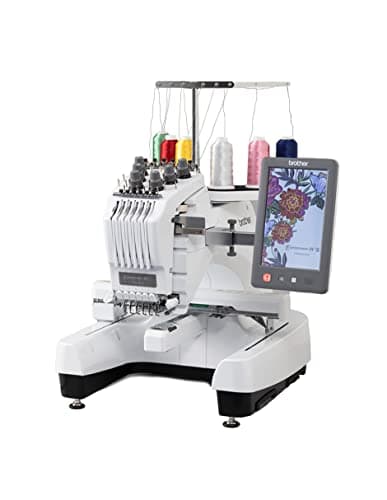
01Brother Entrepreneur PR680WBrother Entrepreneur PR680WSmall-business embroidery, especially caps and multi-color logosBest for selling patches9.3$12,999.99 - View on Amazon
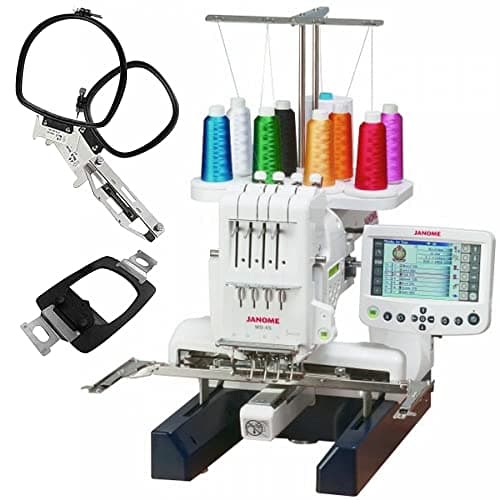
02Janome MB-4SJanome MB-4SHome-based embroidery businesses short on bench spaceBest compact patch machine8.7$4,999.00 - View on Amazon
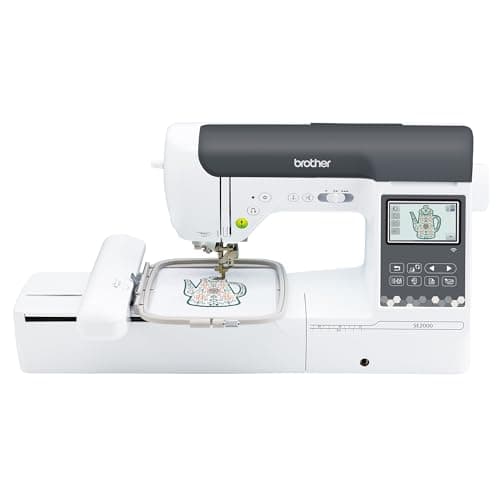
03Brother SE2000Brother SE2000The upgrade out of a 4 x 4 in combo machineBest for occasional patches8.6$1,499.99 - View on Amazon
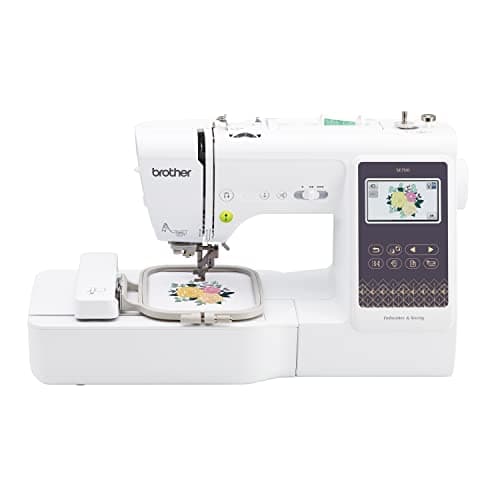
04Brother SE700Brother SE700A first embroidery machine you expect to replaceCheapest way to try patches7.4$529.99 - View on Amazon

Scores are ours and editorial. They are never published as review or rating markup, because we have not tested these machines - here is what we did instead.

The short answer

The Brother PR680W, and the reason is density rather than size.

A patch is typically 2 to 4 inches across. Every machine on this site clears that easily, so the field size that decides every other page decides nothing here.

What decides it is that patches are dense - a satin-stitched border plus a filled background puts a lot of stitches into a small area - and that nobody makes one patch. Brother publishes six needles and 1,000 stitches per minute on the PR680W, which means a six-color patch runs start to finish without you.

How we judged this, before any machine is named

Patch work breaks the usual ranking because three of the four things that normally matter stop mattering.

1. Field size: almost irrelevant, with one exception

A 4 x 4 in field is 16 square inches. A typical 3 in patch needs about 9. Even the entry machines have headroom, so paying for a 6 x 10 in field to make patches is paying for nothing.

The exception is batching. A larger field lets you hoop several patches at once on a single piece of backing and stitch them in one run. On a 6 x 10 in field you can lay out four 3 in patches where a 4 x 4 in field takes one. That is the only way field size earns its money here, and it only matters once you are making patches in quantity.

2. Needle count: the whole decision

Patches are multi-color almost by definition - a border color, a background, and at least one design color. On a single-needle machine every one of those is a manual re-thread.

3. Stitch density: what it does to your time

A patch is not a light design. A satin border alone can run several thousand stitches, and a filled background several thousand more. The arithmetic below is the honest picture of what that means per patch.

4. Whether the machine can finish the edge

This is where we have to be straight with you: no machine on this site merrows a patch edge. A true merrowed border is made on a dedicated overlock machine. What these machines produce is a satin-stitched border, which is the standard finish for a sew-on or iron-on embroidered patch and is what most patch sellers actually ship. If you specifically need the rolled, corded edge of a merrowed patch, no embroidery machine at any price on this page gives you it.

The machines, on published numbers

Patch-relevant specifications, from each maker's own product page
MachineNeedlesFieldSpeedWhat it means for patches
Brother PR680W612 x 8 inUp to 1,000 spmSix colors unattended; field fits several patches per hooping
Janome MB-4S4240 x 200 mm800 spmFour colors unattended; liftable at 22.6 kg
Brother SE200015 x 7 in650 spmEvery color change is manual; two patches per hooping
Brother SE70014 x 4 inNot published by BrotherOne patch per hooping, and no published speed to plan around

Fifty patches, four colors, 9,000 stitches each

Take a dense 3 in patch at 9,000 stitches - a satin border plus a filled background - in four colors.

Single-needle at 650 spm: 9,000 / 650 = 13.8 minutes of stitching. Three thread changes at roughly two minutes each adds 6 minutes of hands-on time. About 20 minutes per patch, of which 6 minutes requires you. Across fifty patches that is 5 hours of standing at the machine.

PR680W at 1,000 spm: 9 minutes of stitching, zero thread changes. Across fifty patches you are required for hooping and nothing else.

The machine is not 35% better because it is 35% faster. It gives you back five hours on a single order of fifty.

Why each machine placed where it did

1. Brother PR680W - the one that pays for itself on patches

Six needles, a published 12 x 8 in field and 1,000 stitches per minute. The field matters here only because it lets you batch: several patches laid out on one piece of backing, stitched in a single unattended run.

The honest drawback: it does not sew, so cutting and applying patches still needs a separate machine or a heat press. The footprint is commercial rather than domestic. And it is a serious purchase - if patches are a hobby rather than a product line, this is far more machine than the job needs.

2. Janome MB-4S - four needles you can lift

Janome publishes four needles, a 240 x 200 mm field (74.4 square inches), 800 stitches per minute and a weight of 22.6 kg. That weight is the argument: it is a machine one person can move off a shared table, and the six-needle machines are not.

The honest drawback: four needles, not six. Patches very often run to five colors once you count the border, the background and the design, and a five-color patch stops and waits for you on this machine - which removes much of the reason to buy it. 800 spm against 1,000 is a smaller issue.

3. Brother SE2000 - the right answer if patches are occasional

5 x 7 in, 650 spm embroidery and 850 spm sewing both published, 241 sewing stitches, wireless transfer. The field fits two patches per hooping, and because it also sews you can attach a finished patch without a second machine.

The honest drawback: single needle. Every color change on every patch is yours to do, and the arithmetic above shows where that ends up on a run of fifty. It is the right machine for someone making patches occasionally, and the wrong one for someone selling them.

4. Brother SE700 - the cheapest way to find out if you like it

4 x 4 in, 135 designs, a touchscreen, and it sews. Sixteen square inches is plenty for a single patch, and this is the least money you can spend to find out whether patch work is something you actually want to do.

The honest drawback: one patch per hooping, single needle, and Brother publishes no speed figure at all for it - so you cannot estimate a run before you start it. Anyone who decides they like patch work replaces this machine quickly.

What the machine is not the constraint on

Three things decide patch quality more than the machine does, and it is worth knowing that before you spend.

Backing. Patches are stitched on heavy cutaway or a purpose-made patch backing, not on the light tear-away you would use on a shirt. Get this wrong and the patch curls no matter which machine made it.

Digitizing. A satin border has to be digitized at the right width and density or it either gaps or goes stiff and ripples. This is a file problem and no machine fixes it.

The edge finish. As above - satin border from the machine, merrowed edge from an overlock. Decide which one your product needs before you buy anything.

Skip this

Skip the multi-needle tier if your patches are one or two colors

Needles solve color changes. A one-color or two-color patch has almost none, so six needles buy you nothing and the money is better spent on backing, digitizing and a heat press.

In that case the SE2000 at 5 x 7 in is the sensible ceiling, and the budget roundup covers what the tier below it gives up.

Choosing in three questions

How many colors is a typical patch? One or two: stay single-needle. Four or more: needles are your constraint and nothing else is.

Are you selling them? If patches are a product line with repeat orders, the unattended run is the whole business case - the small business roundup works the payback through in detail.

Do you need a merrowed edge? If yes, budget for an overlock machine on top of whatever you buy here. If a satin border is fine - and for most sew-on patches it is - any machine on this page produces one.
The write-ups

Every pick, in full

01 / Best for selling patches

Brother Entrepreneur PR680W

Brother

9.3 / 10

Multi-needle tier

Brother Entrepreneur PR680W

Six needles, a 12 x 8 in field, 1,000 stitches per minute and cap frame capability. This is the machine that turns embroidery from a hobby into something that can invoice, and it is genuinely on Amazon rather than dealer-gated.

$12,999.99 - View on Amazon

#ad Price as of September 13, 2026, from Amazon. Prices change. How this site is funded.

Published specifications for the Brother Entrepreneur PR680W, with the source of each
SpecificationPublished valueWhere it is published
Needles6Published as "6-Needle" embroidery systemBrother PR680W product page
Maximum embroidery area12 in x 8 inPublished as "12" x 8"" in the specifications; the description states "8" x 12""Brother PR680W product page
Maximum embroidery speedUp to 1,000 stitches per minuteBrother PR680W product page
Cap embroideryCap frame capabilityBrother PR680W product page
Display10.1 in high-definition displayBrother PR680W product page
Built-in designs100 designs, 18 monogramming fonts, 50 lettering fontsBrother PR680W product page
WirelessWireless enabled, with Design Database TransferBrother PR680W product page

The arithmetic

Six needles do not make it six times faster. They remove the re-thread, which on a six-color design is where the time actually goes.

A six-color left-chest logo on a single-needle machine is five thread changes. Call each one two minutes of unthreading, re-threading and re-tensioning: that is 10 minutes of hands-on time per garment, and you have to be standing there for all of it. On the PR680W the same design runs start to finish without you. At 1,000 spm against 650 spm the stitching itself is also about 35% quicker, but the stitching was never the bottleneck.

What it does well

  • 96 sq in of field: six times a 4 x 4 in machine and 60% more than 6 x 10 in
  • 1,000 spm against 650 spm on Brother's own upper single-needle machines
  • Six needles means a six-color design runs unattended
  • Cap frame capability, which no single-needle machine here has
  • 10.1 in screen makes on-machine editing genuinely usable

What it does not

  • It does not sew, so budget for a separate sewing machine
  • Footprint and weight are commercial, not domestic
  • The cap frame is a separate purchase

Skip this one if

Everything you stitch is one color on flat goods. Six needles buy you color changes you never make, and a single-needle 6 x 10 in machine costs a fraction of this.

How it scores, by criterion

Room to work9.5
What it upgrades from10.0
Value for the tier8.5
Headroom before the next upgrade9.0
Spec transparency9.5

02 / Best compact patch machine

Janome MB-4S

Janome

8.7 / 10

Multi-needle tier

Janome MB-4S

Four needles and a 240 x 200 mm field in a machine that is physically smaller and lighter than the six-needle alternatives. The four-color ceiling is the whole decision.

$4,999.00 - View on Amazon

#ad Price as of September 13, 2026, from Amazon. Prices change. How this site is funded.

Published specifications for the Janome MB-4S, with the source of each
SpecificationPublished valueWhere it is published
Needles4 (single head)Janome Global MB-4S product page
Maximum embroidery size240 mm x 200 mm (9.45 in x 7.87 in)Published as "240 x 200" mmJanome Global MB-4S product page
Maximum embroidery speed800 stitches per minutePublished as "Maximum embroiderying speed: 800 spm"Janome Global MB-4S product page
Built-in designs50 designs, 10 English monogramming fontsJanome Global MB-4S product page
Machine dimensions365 mm x 660 mm x 520 mmJanome Global MB-4S product page
Weight22.6 kg (49.8 lb)Janome Global MB-4S product page

What it does well

  • 74.4 sq in of field, more than a 6 x 10 in single-needle machine
  • 22.6 kg is genuinely liftable, which the six-needle machines are not
  • Janome publishes the field in millimeters, unambiguously, with no width-height confusion

What it does not

  • Four needles, not six: a five-color design still interrupts you
  • 800 spm against the PR680W's 1,000
  • 50 built-in designs is a small library

Skip this one if

Your typical design has more than four colors. On a four-needle machine a five-color design still stops and waits for you, which removes most of the reason to buy one.

How it scores, by criterion

Room to work8.5
What it upgrades from9.5
Value for the tier8.5
Headroom before the next upgrade7.0
Spec transparency9.5

03 / Best for occasional patches

Brother SE2000

Brother

8.6 / 10

Upper combo tier

Brother SE2000

The combo machine to buy if you are upgrading rather than starting: 5 x 7 in of field, 241 sewing stitches, a 3.7 in color screen, wireless design transfer, and published speed figures, which most of Brother's range does not have.

$1,499.99 - View on Amazon

#ad Price as of September 13, 2026, from Amazon. Prices change. How this site is funded.

Published specifications for the Brother SE2000, with the source of each
SpecificationPublished valueWhere it is published
Maximum embroidery area5 in x 7 inPublished as "5" x 7""Brother SE2000 product page
Needle to arm7.4 inPublished as "7.4" from needle to arm"Brother SE2000 product page
Maximum embroidery speed650 stitches per minuteBrother SE2000 product page
Maximum sewing speed850 stitches per minuteBrother SE2000 product page
Built-in embroidery designs193Brother SE2000 product page
Built-in sewing stitches241Brother SE2000 product page
Magnetic hoop supportTakes the Brother 4 in x 7 in magnetic hoopBrother SE2000 product page
Display3.7 in color LCD touchscreenBrother SE2000 product page

The arithmetic

5 x 7 in is 35 sq in of design area. 4 x 4 in is 16. The upgrade more than doubles what you can stitch in one hooping.

35 / 16 = 2.19. Everything that previously needed splitting across two hoopings - a full back design, a large name drop, most jacket work - becomes a single hooping. The time saved is not the stitching. It is the re-hooping and the alignment.

What it does well

  • 119% more design area than any 4 x 4 in machine
  • Brother publishes both speed figures, which the SE600 and SE700 pages do not
  • Wireless design transfer removes the USB stick from the workflow
  • Officially supports the 4 x 7 in magnetic hoop, which is the real fix for hoop burn

What it does not

  • 650 spm embroidery is slow next to a multi-needle machine's 1,000
  • 7.4 in needle-to-arm is a domestic figure; it does not make this a quilting machine

Skip this one if

You are going to want 6 x 10 in within a year. Buy the field you will need, not the field you need today.

How it scores, by criterion

Room to work7.5
What it upgrades from9.5
Value for the tier8.5
Headroom before the next upgrade7.0
Spec transparency9.5

04 / Cheapest way to try patches

Brother SE700

Brother

7.4 / 10

Entry combo tier

Brother SE700

The cheapest honest way into machine embroidery, and the machine most people outgrow first. A 4 x 4 in hoop is 16 square inches of design area: it will monogram, it will do a left-chest logo, and it will not do the back of a jacket.

$529.99 - View on Amazon

#ad Price as of September 13, 2026, from Amazon. Prices change. How this site is funded.

Published specifications for the Brother SE700, with the source of each
SpecificationPublished valueWhere it is published
Maximum embroidery area4 in x 4 inPublished as "4" x 4"" maximum embroidery areaBrother SE700 product page
Work area (needle to arm)6.4 in wide x 4.0 in highPublished as "6.4" x 4.0" work area"Brother SE700 product page
Built-in embroidery designs135Brother SE700 product page
Built-in sewing stitchesOver 103Brother SE700 product page
Display3.2 in x 1.8 in LCDBrother SE700 product page
Maximum embroidery speedBrother does not publish a figure for this modelBrother SE700 product page

The arithmetic

Moving from a 4 x 4 in hoop to a 5 x 7 in hoop is not 75% more room. It is 119% more.

4 x 4 = 16 sq in. 5 x 7 = 35 sq in. 35 / 16 = 2.19, so the 5 x 7 in field is 119% larger. That is the biggest proportional jump anywhere in the Brother range, and it is why the SE700 is the machine most first buyers replace.

What it does well

  • Sews and embroiders, so it can be the only machine on the table
  • Touchscreen design editing rather than a button-and-dial interface
  • The 6.4 in work area matches the SE600, so piecing is unaffected

What it does not

  • 4 x 4 in is a hardware ceiling, not a hoop you can buy past
  • Brother publishes no stitches-per-minute figure for it

Skip this one if

You already know you want designs bigger than a coaster. The 4 x 4 in ceiling is fixed in hardware and no accessory hoop lifts it.

How it scores, by criterion

Room to work4.5
What it upgrades from8.5
Value for the tier8.0
Headroom before the next upgrade4.0
Spec transparency7.0

How this was ranked

Machines we claim to have tested: none. Everyone in this category says they tested twenty. We have not tested any, and we say so. What we did instead: built the candidate set from what Amazon actually stocks, read the published specification off each manufacturer’s own page, normalized every measurement into the same units and the same order, did the arithmetic on what each step up buys, and left every figure the maker does not publish visibly blank rather than filling it in. Every number on this page links to where it was published, so you can check the work in about five minutes.

Sponsored placements
0
Free machines accepted
0
Specs linked to a maker page
All

The full method, including what we refuse to claim

Questions people actually ask

Frequently asked

What is the best embroidery machine for making patches?

For selling patches, the Brother PR680W: six needles and a published 1,000 stitches per minute, so a multi-color patch runs unattended. For occasional patches the Brother SE2000 is enough - a 5 x 7 in field fits two patches per hooping and it also sews.

Do you need a big embroidery field to make patches?

No. A typical 3 in patch needs about 9 square inches and even a 4 x 4 in machine gives you 16. A larger field only helps once you want to batch several patches onto one hooping, which matters when you are making them in quantity.

Can an embroidery machine make a merrowed edge patch?

No. A merrowed edge is made on a dedicated overlock machine. Embroidery machines produce a satin-stitched border, which is the standard finish for sew-on and iron-on embroidered patches and is what most patch sellers ship.

How long does it take to embroider a patch?

At a typical 9,000 stitches for a dense 3 in patch: about 14 minutes at 650 stitches per minute, or about 9 at 1,000. On a single-needle machine add roughly two minutes per color change, which on a four-color patch is another 6 minutes of hands-on time.

What backing do you use for embroidered patches?

Heavy cutaway or a purpose-made patch backing, not the light tear-away used for shirts. Patches are dense and unsupported at the edges, so a light backing lets them curl. This is the single most common cause of bad patches and no machine upgrade fixes it.

Is a 4-needle machine enough for patches?

Often not. Once you count a border color, a background and the design itself, patches commonly reach five colors - and a five-color design still stops and waits for you on a four-needle machine. Count the colors in the patches you actually plan to make before choosing four over six.

Sources

Every specification on this page was read from one of these pages on 1 September 2026.

Read next