Guide
Is an embroidery machine worth it?
For some people this is one of the best purchases in the craft world. For others it is an expensive machine that sits under a dust cover. Here is how to tell which you are, before you find out the expensive way.
Heads up: the buy links on this page are affiliate links. If you buy through one we earn a commission at no extra cost to you. It does not change what we recommend or the order we rank things in - here is how we keep those separate.
Worth it if: you are selling finished work, you personalize gifts several times a year, you already sew and keep wanting decoration you cannot buy, or you run a team, club or family that constantly needs names on things. Not worth it if: you want one monogrammed item, you expect it to be quick, or you are buying it to make money without having tested whether anyone is buying.
The question behind the question
Almost nobody asking this actually wants to know whether embroidery machines are good. They want to know whether they will use one, because a machine that gets used twice is expensive regardless of what it cost.
So this page is not a sales pitch. It is four situations where the machine earns its place, three where it does not, and the arithmetic for the one case where the answer is genuinely a calculation.
Where it is genuinely worth it
1. You are selling the output
This is the only case where “worth it” is arithmetic rather than judgment, and the numbers are unusually favorable. A blank cap or tote costs a few dollars; the same item embroidered sells for a large multiple of that. The machine is the only real fixed cost and the marginal cost per piece is thread, backing and your time.
The honest caveat: that margin is only real if people actually buy. The cheapest way to test demand is not to buy a machine at all - it is to sell a handful of pieces made by someone else first.
2. You personalize gifts regularly
Towels, robes, baby blankets, bags, Christmas stockings. If you give personalized gifts several times a year and currently pay someone to embroider them, the machine displaces a recurring cost rather than creating a new one.
A rough sanity check: count what you paid for personalization in the last two years. If it is a meaningful fraction of an entry machine, the machine is close to paying for itself already.
3. You already sew, and you keep wanting decoration you cannot buy
This is the most reliably satisfied buyer on the list. Someone who already makes bags, garments or quilts has the fabric skills, owns the notions, and has a specific unmet want - a label, a monogram, a motif. The machine slots into an existing habit rather than trying to create one.
If this is you, buy embroidery-only rather than a combination machine. You get the same field for less because you are not paying twice for a sewing head, and your sewing machine stays threaded for sewing.
4. You supply a team, club, school or large family
Names on kit, club logos, uniform labels, matching gear. The defining feature is repetition of the same design onto many items, which is exactly what these machines are good at and exactly what hand embroidery is not.
Where it is not worth it, plainly
You want one monogrammed thing. Pay an embroidery shop. It will cost a fraction of the machine and you will get a better result, because they have done it a thousand times and own the right backing.
You expect it to be fast. It is not. A design runs for real minutes, and on a single-needle machine you are present for every color change. The arithmetic below is deliberately unflattering on this point.
You are buying it to start a business you have not tested. The machine is the easy part. Digitizing, backing choice, pricing and finding customers are the hard parts, and none of them is solved by owning hardware. The home business roundup is honest about what the machine does and does not fix.
How long a design actually takes, so nothing is a surprise
Take a modest 12,000-stitch design - a left-chest logo or a decent monogram.
At 650 spm, the figure Brother publishes for the SE2000 and the PE900: 12,000 / 650 = about 18 minutes of stitching.
Add hooping - call it 2 to 5 minutes with backing, depending on the item - and every color change on a single-needle machine at roughly two minutes each. A four-color design is 3 changes = 6 more minutes, and you must be standing there for them.
So a realistic single item is 25 to 30 minutes, most of it hands-off but interrupted. That is the honest number. Anyone quoting you minutes is describing stitching time only.
The costs nobody mentions in the listing
The machine is the largest line item, not the only one. Before deciding it is worth it, price these too:
- Stabilizer in several weights. This is a consumable and it is the single biggest cause of bad results.
- Embroidery thread, which is not the same as sewing thread.
- A second hoop, so one item is being prepared while another stitches.
- Designs, unless you only ever use the built-in library. Digitizing software is a separate purchase again.
- A magnetic frame if you embroider towels, fleece or knits - a screw hoop marks them. Magnetic hoops covers what that fixes.
If the answer is yes, what should you actually buy?
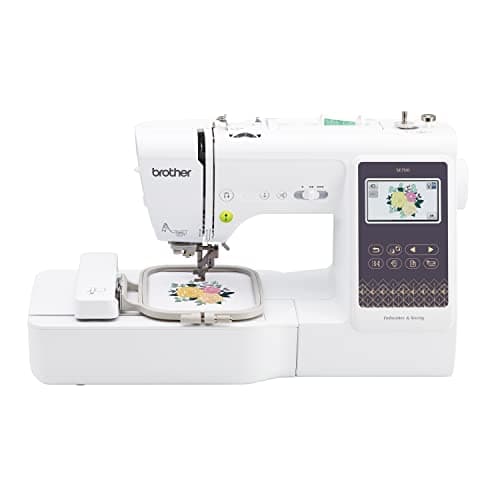
Testing whether you like it: the entry tier. A Brother SE700 sews and embroiders and is the least money you can spend to find out. Its 4 x 4 in field is a real ceiling, so treat it as a trial rather than a keeper - the budget roundup is honest about what that tier gives up.
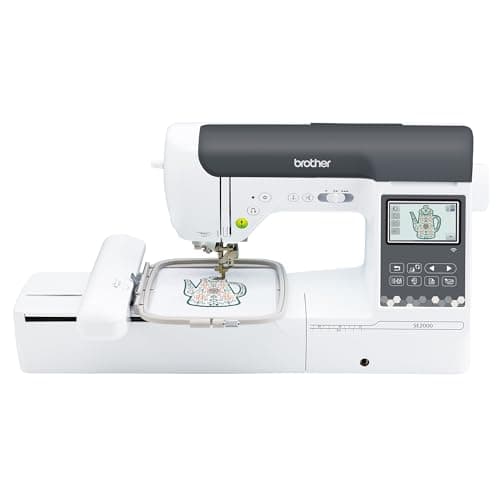
Committing properly: the 5 x 7 in tier. Brother publishes 650 spm for the SE2000 along with 241 sewing stitches and wireless transfer, and 35 square inches covers the overwhelming majority of what people actually make. This is the machine most people should own.
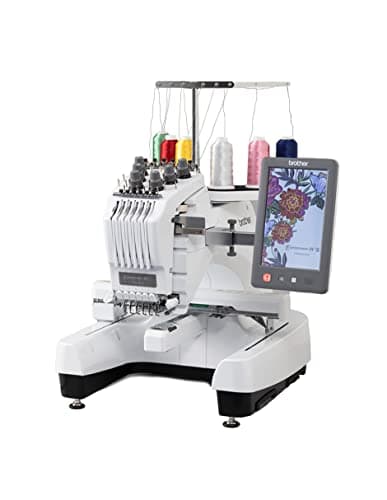
Charging for it: multi-needle. The Brother PR680W publishes six needles and 1,000 stitches per minute, so a multi-color design runs without you - which is the difference between a hobby and a workflow.
Skip this
The cheapest honest answer: do not buy one yet
If you are unsure, send one design to an embroidery shop and have them stitch it on the item you had in mind. You will spend a small fraction of the machine price and you will learn the thing that actually decides this: whether you like the result enough to want to make more of them.
Plenty of people who do that come back and buy a machine. Plenty discover they wanted one nice embroidered thing, not a new hobby. Both are useful answers and neither requires spending first.
The picks
What to buy, once you know which situation you are in
One machine per honest answer: the cheapest way to find out, the one most people should own, and the one that only makes sense if you are charging for the work.
Brother
Brother SE700
Entry combo tier
The cheapest honest way into machine embroidery, and the machine most people outgrow first. A 4 x 4 in hoop is 16 square inches of design area: it will monogram, it will do a left-chest logo, and it will not do the back of a jacket.
Skip it if: You already know you want designs bigger than a coaster. The 4 x 4 in ceiling is fixed in hardware and no accessory hoop lifts it.
#ad Price as of September 13, 2026, from Amazon. Prices change. How this site is funded.
Brother
Brother SE2000
Upper combo tier
The combo machine to buy if you are upgrading rather than starting: 5 x 7 in of field, 241 sewing stitches, a 3.7 in color screen, wireless design transfer, and published speed figures, which most of Brother's range does not have.
Skip it if: You are going to want 6 x 10 in within a year. Buy the field you will need, not the field you need today.
#ad Price as of September 13, 2026, from Amazon. Prices change. How this site is funded.
Brother
Brother Entrepreneur PR680W
Multi-needle tier
Six needles, a 12 x 8 in field, 1,000 stitches per minute and cap frame capability. This is the machine that turns embroidery from a hobby into something that can invoice, and it is genuinely on Amazon rather than dealer-gated.
Skip it if: Everything you stitch is one color on flat goods. Six needles buy you color changes you never make, and a single-needle 6 x 10 in machine costs a fraction of this.
#ad Price as of September 13, 2026, from Amazon. Prices change. How this site is funded.
How this was ranked
Machines we claim to have tested: none. Everyone in this category says they tested twenty. We have not tested any, and we say so. What we did instead: built the candidate set from what Amazon actually stocks, read the published specification off each manufacturer’s own page, normalized every measurement into the same units and the same order, did the arithmetic on what each step up buys, and left every figure the maker does not publish visibly blank rather than filling it in. Every number on this page links to where it was published, so you can check the work in about five minutes.
- Sponsored placements
- 0
- Free machines accepted
- 0
- Specs linked to a maker page
- All
Questions people actually ask
Frequently asked
Is an embroidery machine worth it for a beginner?
It is if you already sew, or if you regularly pay someone else to personalize gifts. It is not if you want a single monogrammed item - an embroidery shop will do that for a fraction of the machine price and get a better result first time.
Can you make money with an embroidery machine?
Yes, and the margins are genuinely good - a blank cap costs a few dollars and sells for a multiple of that embroidered. The catch is that the machine is the easy part: digitizing, backing, pricing and finding customers decide whether it works, and none of them is solved by buying hardware.
How long does an embroidery machine take per item?
Realistically 25 to 30 minutes for a 12,000-stitch design: about 18 minutes of stitching at a published 650 stitches per minute, plus hooping, plus roughly two minutes for each color change on a single-needle machine.
What else do you have to buy besides the machine?
Stabilizer in several weights, embroidery thread, embroidery needles, and ideally a second hoop so one item is prepared while another stitches. If you embroider towels, fleece or knits, add a magnetic frame - a screw-tightened hoop marks them.
Is it cheaper to buy an embroidery machine or pay someone?
Paying someone is cheaper until you are doing it regularly. Add up what you have spent on personalization in the last two years; if it is a meaningful fraction of an entry machine, ownership starts to make sense. For one-off items it almost never does.
Are embroidery machines hard to use?
The machine is the easy part - load a design, hoop the item, press start. The learning curve is stabilizer choice and hooping technique, which is where almost every bad result comes from. Expect a few ruined test pieces and budget backing accordingly.
Sources
Every specification on this page was read from one of these pages on 1 September 2026.